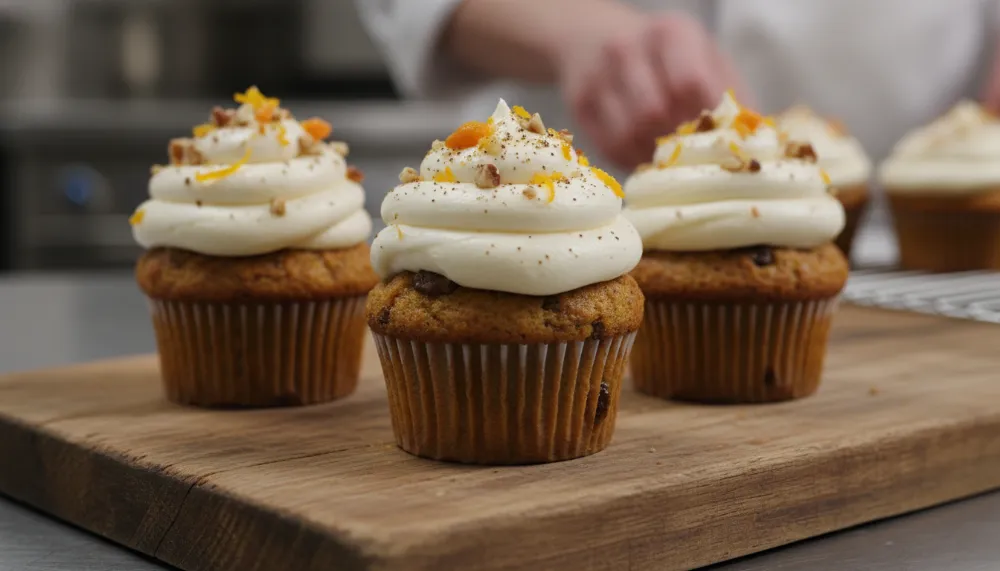

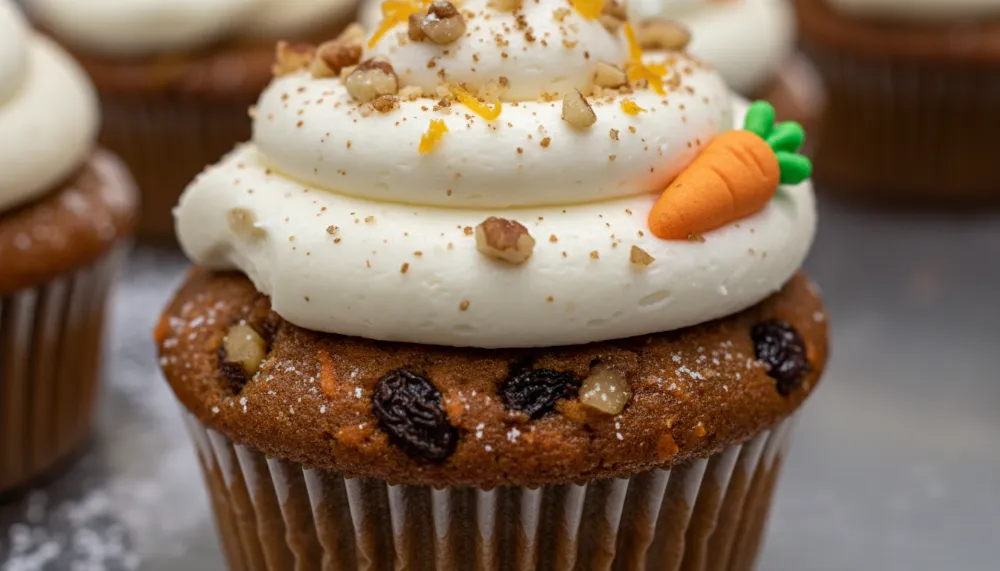
These carrot cake cupcakes are the perfect blend of spice, moisture, and sweetness, topped with a velvety cream cheese frosting that melts in your mouth. They represent a timeless dessert that brings comfort and sophistication to any gathering, whether a casual picnic or an elegant dinner party.
Perfect Carrot Cake Cupcakes
Ingredients
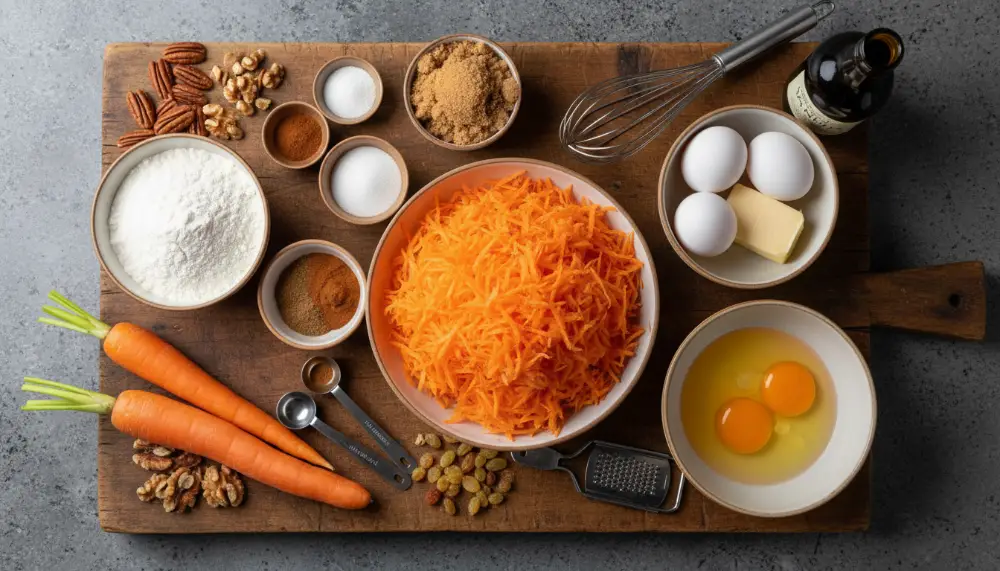
- 1 2 cups All-purpose flour
- 2 2 tsp Baking powder and 1 tsp Baking soda
- 3 1/2 tsp Salt
- 4 2 tsp Cinnamon, 1 tsp Ginger, 1/2 tsp Nutmeg
- 5 3/4 cup Vegetable oil
- 6 4 Large eggs (room temperature)
- 7 1 1/2 cups Brown sugar (packed)
- 8 1 tsp Vanilla bean paste
- 9 3 cups Finely grated carrots
- 10 1 cup Chopped pecans or walnuts
Instructions
- 1 Preheat oven to 350°F (175°C) and line a cupcake tin with paper liners.
- 2 In a medium bowl, whisk together flour, baking powder, baking soda, salt, and spices.
- 3 In a large bowl, beat eggs, sugar, oil, and vanilla bean paste until well combined.
- 4 Gradually fold the dry ingredients into the wet ingredients until just mixed.
- 5 Fold in the grated carrots and chopped nuts gently.
- 6 Fill cupcake liners 3/4 full and bake for 18-22 minutes until a toothpick comes out clean.
- 7 Cool completely before frosting with your favorite cream cheese icing.
The Fascinating History of Carrot Cake Cupcakes
The lineage of the carrot cake can be traced back to Medieval Europe. During this period, refined sugar was an expensive luxury reserved for the elite. Resourceful cooks turned to carrots, which contain more sugar than almost any other vegetable besides the sugar beet, to sweeten their puddings and cakes. These early recipes were often more akin to steamed puddings than the fluffy cupcakes we recognize today. One of the first recognizable precursors was the carrot pudding, often cooked in a crust or steamed. A 1591 English recipe describes a carrot stuffed with a mixture of breadcrumbs, cream, eggs, raisins, and spices. While some early variations used meat, professional adaptations today utilize beef suet or entirely vegetarian bases to maintain the desired richness without sacrificing flavor.
By the 19th century, carrot cake became a traditional birthday favorite for children in Switzerland. The transition to the cupcake format occurred in the mid-20th century, particularly in the United States during the 1960s and 70s, as carrot cake was marketed as a healthier alternative to traditional confections. This shift allowed for better portion control and more convenient serving options at parties and gatherings. The modern carrot cake cupcake is now a global phenomenon, celebrated for its unique texture and complex flavor profile.
Essential Tools for Baking Mastery
To achieve the perfect texture in your Carrot Cake Cupcakes, having the right equipment is paramount. Professional results often depend on the precision of your preparation. For instance, the way you grate your carrots can significantly impact the final crumb of the cake. Large, chunky shreds can make the cupcake feel heavy, while a fine grate allows the carrots to melt into the batter during the baking process.
We recommend using high-quality appliances to streamline your baking process:
- Cuisinart 8 Cup Food Processor: https://amzn.to/47Nhbg8 (Why Perfect: Fast chopping and slicing, it makes grating pounds of carrots an absolute breeze, ensuring a consistent texture for your batter).
- Ninja BN751 Professional Plus DUO Blender: https://amzn.to/3LCDyNR (Why Perfect: With its 1000W motor, it is perfect for creating smooth fruit purees if you want to experiment with a tropical pineapple variation).
- Cosori 9-in-1 TurboBlaze Air Fryer 6 Qt: https://amzn.to/4hRWmVq (Why Perfect: Excellent for quickly toasting your walnuts or pecans to bring out their natural oils before folding them into the batter).
- Rubbermaid Brilliance Glass Storage Set of 9: https://amzn.to/4oD0YkY (Why Perfect: These are perfect for keeping your pre-grated carrots fresh or storing leftover frosting without any leaks).
- FoodSaver Vacuum Sealer Machine: https://amzn.to/4qWgVnS (Why Perfect: Keeps your bulk ingredients like nuts and flour fresh for months, preventing the stale taste that can ruin a delicate cupcake).
The Science of a Perfect Moist Crumb
Many home bakers wonder why some carrot cake cupcakes are dry while others are incredibly moist. The secret lies in the fat choice and the sugar content. Professional recipes often use vegetable oil instead of butter. While butter provides a wonderful flavor, oil remains liquid at room temperature and even when refrigerated, ensuring that the cupcake stays soft and tender. The addition of brown sugar, which contains molasses, provides hygroscopic properties that help the cake retain moisture even after it has cooled.
Furthermore, the carrots themselves release moisture as they bake. This is why it is crucial to use fresh, whole carrots that you grate yourself. Pre-grated carrots sold in bags are often treated with preservatives and have had much of their moisture removed to prevent spoilage in the bag. Using freshly grated carrots ensures that your Carrot Cake Cupcakes have the required hydration for that signature melt-in-your-mouth experience.
Exploring Professional Flavor Variations
Gourmet bakers elevate the standard carrot cake cupcake by layering complex textures and aromatics. All variations below exclude alcohol-based extracts or pork-derived fats, staying true to traditional and inclusive dietary needs. Instead of vanilla extract, which typically contains alcohol, professionals use vanilla bean paste or seeds to provide those deep, floral notes.
The Tropical Spice Variation
This variation incorporates crushed pineapple and toasted shredded coconut into the batter. The pineapple adds enzymes that break down flour proteins, resulting in an exceptionally tender crumb. The acidity of the pineapple also reacts with the baking soda to provide a little extra lift, making the cupcakes light and airy despite the heavy ingredients.
The Harvest Blend
A rich variation featuring toasted walnuts or pecans, grated zucchini, and golden raisins. The addition of zucchini increases moisture without altering the flavor profile significantly. To ensure the raisins are plump, soak them in warm apple juice for ten minutes before adding them to the batter. This prevents them from absorbing moisture from the cake itself during baking.
Citrus-Infused Elegance
Professional chefs often fold fresh orange or lemon zest into the cream cheese frosting. This provides a bright contrast to the earthy spices of the cake. Instead of using any liqueurs, a simple reduction of apple cider (vinegar-based) can be used as a drizzle to provide a tangy, sophisticated finish that cuts through the richness of the frosting.
Nutritional Profile of a Classic Cupcake
Understanding the nutritional value of your Carrot Cake Cupcakes can help you enjoy them as part of a balanced diet. A standard professional-grade cupcake (approximately 85 to 100g) typically follows this profile:
- Calories: 350 to 460 kcal
- Total Fat: 18g to 25g (primarily from vegetable oils and cream cheese)
- Carbohydrates: 45g to 65g
- Sugars: 30g to 50g
- Protein: 3g to 5g
- Fiber: 1g to 2g
- Key Micronutrients: High in Vitamin A due to the beta-carotene in the carrots, with moderate amounts of Calcium and Iron.
Mastering the Cream Cheese Frosting
The crowning glory of any Carrot Cake Cupcake is the frosting. To achieve a professional finish, your cream cheese and butter must be at the exact same room temperature. If the cream cheese is too cold, you will end up with tiny lumps that are impossible to beat out. If it is too warm, the frosting will be soup-like and won’t hold its shape when piped.
A common professional secret is to beat the butter and sugar first until extremely pale, then add the cream cheese in cold blocks and beat only until just combined. This prevents the cream cheese from overworking and losing its structural integrity. For a truly gourmet touch, use a vanilla bean and scrape the seeds directly into the frosting. The black specks look beautiful and the flavor is unmatched by any synthetic alternative.
Storage and Freshness Tips
Because these cupcakes contain fresh vegetables and cream cheese, they require careful storage. Always store frosted cupcakes in an airtight container in the refrigerator. They will stay fresh for up to 4 days. If you need to make them ahead of time, the unfrosted cakes can be frozen for up to three months. Simply wrap them individually in plastic wrap and store them in a heavy-duty freezer bag. When you are ready to serve, thaw them at room temperature and frost fresh.