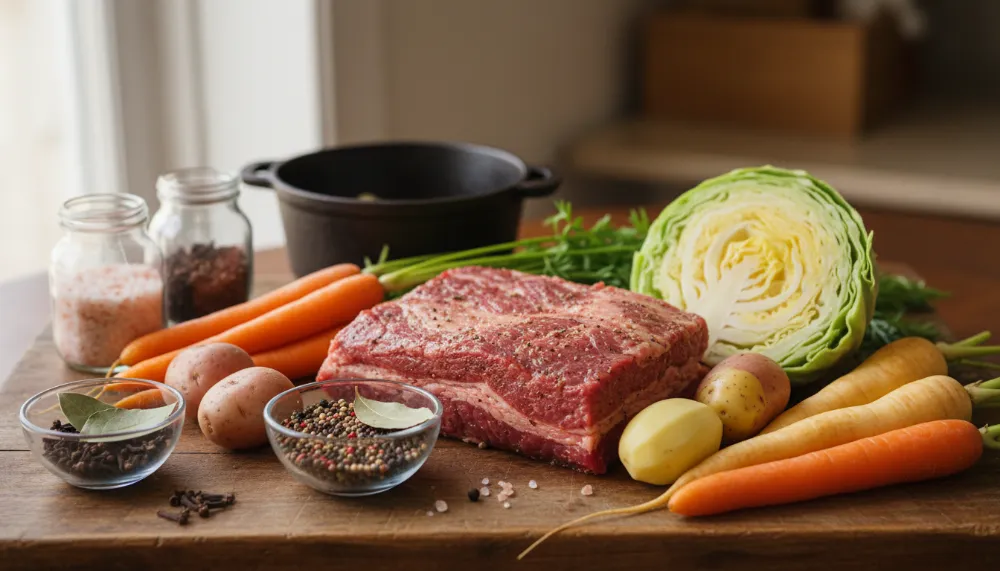

Experience the rich, savory flavors of a classic tradition scaled perfectly for your small household. This Small Batch Corned Beef and Cabbage delivers melt-in-your-mouth brisket and vibrant vegetables without the overwhelming leftovers.
Small Batch Corned Beef and Cabbage
Ingredients
- 1 2-pound flat-cut corned beef brisket with spice packet
- 2 4 cups low-sodium beef broth
- 3 2 cups high-quality apple cider (non-alcoholic)
- 4 1/2 head green cabbage cut into thick wedges
- 5 3 large carrots peeled and cut into 2-inch pieces
- 6 4 small red potatoes halved
- 7 1 small yellow onion quartered
- 8 3 cloves garlic smashed
Instructions
- 1 Rinse the corned beef under cold water to remove excess salt and pat dry.
- 2 Place beef in a 4-quart Dutch oven with onion, garlic, and spice packet.
- 3 Pour in beef broth and apple cider until the meat is submerged. Bring to a boil, then reduce to a low simmer.
- 4 Cover and cook for 2 to 2.5 hours or until the beef is tender when pierced with a fork.
- 5 Add potatoes and carrots to the pot. Simmer for 15 minutes.
- 6 Place cabbage wedges on top of the vegetables. Cover and cook for another 15 minutes.
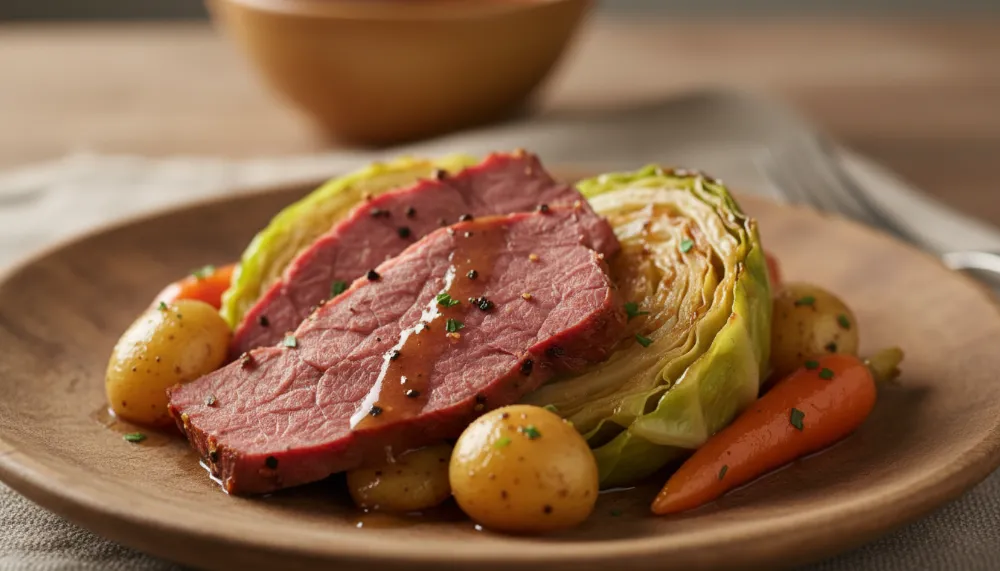
- 7 Remove beef and let it rest for 10 minutes before slicing against the grain. Serve with the vegetables and broth.
The Fascinating Evolution of Small Batch Corned Beef and Cabbage
While many associate this hearty meal with Ireland, Small Batch Corned Beef and Cabbage is actually a quintessential Irish-American success story. In the 19th century, Irish immigrants in American cities found that their traditional cured pork, or back bacon, was prohibitively expensive. In a beautiful display of cultural fusion, they turned to their neighbors, finding that salt-cured beef brisket offered a similar salty, satisfying profile at a much lower cost. This adaptation birthed the tradition we know today, substituting the pork with beef and pairing it with the humblest of vegetables: the cabbage.
Creating a small batch version of this meal is about more than just reducing quantities, it is about perfecting the ratio of aromatics to meat. When you cook for two or three people, the flavors concentrate differently. By focusing on a smaller, higher-quality cut of brisket, you ensure every bite is infused with the seasoning rather than losing flavor to a massive pot of water. This approach respects the history of the dish while tailoring it to modern, smaller households.
Selecting the Perfect Brisket for Your Small Batch
The success of Small Batch Corned Beef and Cabbage starts at the butcher counter. For a small batch, you generally want a flat-cut brisket weighing between 1.5 to 2.5 pounds. The flat cut is leaner and more uniform in shape than the point cut, making it significantly easier to slice into neat, appetizing portions. While the point cut has more fat and flavor, it can be difficult to manage in a small Dutch oven and often results in more waste when trimming.
Always look for meat that has a deep, healthy red color and a thin, even layer of fat on one side. This fat cap is essential because it bastes the meat as it slow-cooks, preventing the lean brisket fibers from drying out. Even in a small batch, that little bit of fat makes the difference between a tough dinner and a fork-tender masterpiece. To prepare your cabbage with precision, the Cuisinart 8 Cup Food Processor is essential for fast chopping and slicing during meal prep, ensuring your wedges are uniform and ready for the pot.
The Chemistry of Tenderization: No Alcohol Required
One of the biggest misconceptions about corned beef is that it requires alcohol to achieve maximum tenderness. In reality, the science of tenderization relies on two things: acidity and time. Brisket is a hardworking muscle full of connective tissue called collagen. To transform this tough tissue into silky gelatin, you need a low and slow cooking environment. By replacing traditional additions with a combination of high-quality beef broth and non-alcoholic apple cider, you introduce natural acids and sugars that help break down the fibers without the need for wine or grain-based liquids.
The apple cider provides a subtle sweetness that balances the heavy salt profile of the cured beef. As the liquid simmers, the sugars in the cider slightly caramelize, adding a depth of flavor that water alone cannot provide. Additionally, using a low-sodium beef broth ensures that the dish remains rich and savory without becoming an over-salted mess, a common pitfall when cooking small batches where evaporation happens quickly.
Mastering the Simmer: A Step-by-Step Breakdown
Cooking Small Batch Corned Beef and Cabbage is a lesson in patience. You cannot rush a brisket. Once your meat is in the pot with your aromatics, the temperature should be kept at a gentle simmer, never a rolling boil. A rolling boil will cause the muscle fibers to seize and toughen, resulting in a rubbery texture. Instead, look for small bubbles just breaking the surface.
The onion and garlic added at the beginning are not meant to be eaten as side vegetables, they are there to build the foundation of the braising liquid. They melt into the broth, lending an earthy sweetness. If you want a smooth, refined sauce to drizzle over your finished plate, you can use the Ninja BN751 Professional Plus DUO Blender, which is perfect for tahini sauce and harissa paste with its 1000W motor, to blend the remaining aromatics and a bit of the cooking liquid into a thick, savory gravy.
Vegetable Timing: Avoiding the Mushy Mess
One of the most frequent mistakes in Small Batch Corned Beef and Cabbage is adding the vegetables too early. Potatoes and carrots require about 30 minutes of cooking time, while cabbage only needs about 15 minutes to reach the perfect tender-crisp state. If you put them in at the start with the beef, they will disintegrate into the broth, leaving you with a muddy-tasting stew rather than distinct, vibrant sides.
Layering is the secret technique. Start with the beef, then add the potatoes and carrots toward the end of the beef’s cooking time. Finally, nestle the cabbage wedges on the very top. The cabbage effectively steams in the savory vapors of the broth, absorbing the seasoning while maintaining its structural integrity. This ensures that when you plate your small batch, each component looks as good as it tastes.
Professional Flavor Variations and Finishing Touches
To take your Small Batch Corned Beef and Cabbage to a professional level, consider a finishing glaze. While the traditional method is to serve the meat straight from the pot, a quick 10-minute stint under the broiler can transform the dish. Brush the top of the brisket with a mixture of honey, Dijon mustard, and a splash of apple cider vinegar, then broil until the fat cap is bubbly and slightly charred. This adds a layer of sweet and tangy contrast to the salty meat.
For those who enjoy a bit of heat, consider adding a teaspoon of red pepper flakes or a smashed ginger root to the braising liquid. These elements don’t make the dish “spicy” in the traditional sense, but they add a warmth that cuts through the richness of the beef fat. If you have leftovers, the Cosori 9-in-1 TurboBlaze Air Fryer 6 Qt roasts chickpeas and vegetables perfectly with a large family capacity, making it the ideal tool to crisp up leftover corned beef hash the next morning.
Nutritional Profile of a Beef-Based Classic
This dish is a nutritional powerhouse, providing a significant amount of high-quality protein, which is essential for muscle repair and metabolic health. A typical serving of corned beef provides approximately 20 grams of protein along with vital micronutrients like Vitamin B12 and Zinc. The cabbage and carrots contribute a wealth of Vitamin C and Vitamin K, making this a balanced meal that supports the immune system.
While the sodium content is higher due to the curing process, you can mitigate this by thoroughly rinsing the brisket before cooking and choosing low-sodium broths for your liquid base. The inclusion of red potatoes provides complex carbohydrates for sustained energy, making Small Batch Corned Beef and Cabbage a satisfying, one-pot meal that fuels the body effectively.
The Importance of the Rest and the Slice
Never slice your corned beef the moment it comes out of the pot. Just like a steak or a roast, the brisket needs time to rest. Resting allows the juices to redistribute through the meat. If you slice it immediately, those juices will run out onto the cutting board, leaving you with dry meat. Wait at least 10 to 15 minutes.
When you are ready to slice, look closely at the meat to identify the “grain” (the direction the muscle fibers run). Always slice perpendicular to the grain. This shortens the fibers, making the meat much easier to chew and giving it that signature melt-in-your-mouth quality. Even the most perfectly cooked brisket will feel tough if sliced with the grain, so this final step is the most crucial for your small batch success.