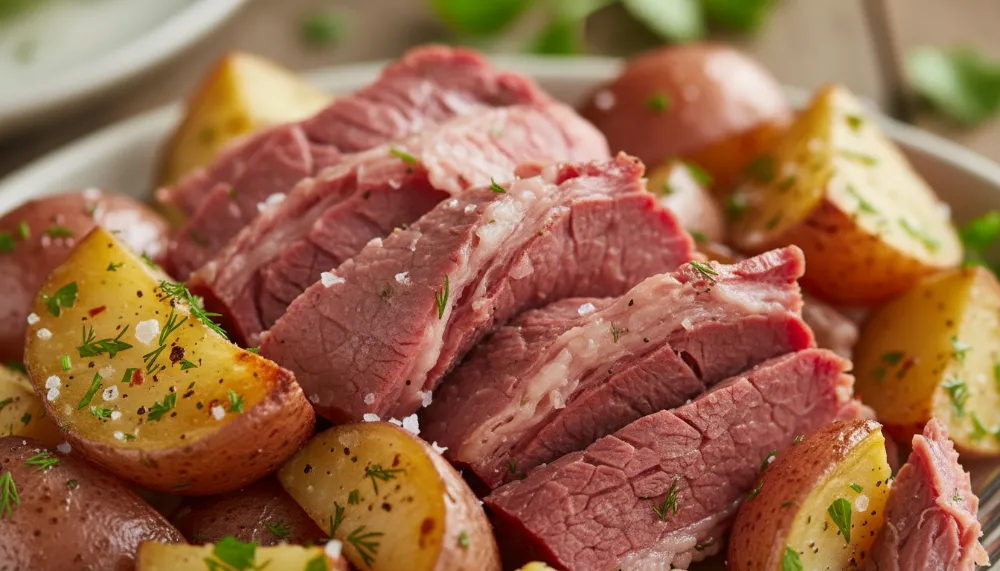

Experience the ultimate comfort of slow-cooked Corned Beef with Red Potatoes, a dish where savory brisket meets the perfect waxy texture of tender tubers. This time-honored recipe transforms simple ingredients into a festive, satisfying feast that will warm your soul.
Corned Beef with Red Potatoes
Ingredients
- 1 4-pound Corned Beef Brisket (with spice packet)
- 2 2 lbs Red Potatoes, halved
- 3 1 lb Large Carrots, peeled and cut into chunks
- 4 1 large Yellow Onion, quartered
- 5 4 cups Low-Sodium Beef Broth
- 6 2 cups Apple Juice (unfiltered)
- 7 2 Bay Leaves
- 8 1 tbsp Black Peppercorns
Instructions
- 1 Rinse the corned beef brisket under cold water to remove excess surface salt. Pat dry with paper towels.
- 2 Place the brisket in a large Dutch oven or heavy-bottomed pot. Add the onion, bay leaves, peppercorns, and the contents of the spice packet.
- 3 Pour the beef broth and apple juice over the meat. Add enough water to ensure the brisket is completely submerged by at least an inch.
- 4 Bring the liquid to a boil, then immediately reduce the heat to a very low simmer. Cover and cook for 3 hours.
- 5 Add the red potatoes and carrots to the pot. Cover and continue to simmer for another 45-60 minutes until the beef is fork-tender and the potatoes are soft.
- 6 Remove the beef and let it rest for 15 minutes before slicing against the grain. Serve alongside the tender potatoes and carrots.
The Fascinating History of Corned Beef with Red Potatoes
The combination of corned beef and red potatoes is a celebrated staple, particularly within North American culinary traditions. This dish represents a fusion of preservation history and immigrant adaptation, evolving into a hearty meal valued for its deep flavors and substantial texture. While many associate it with modern celebrations, its roots are deeply planted in the necessity of survival and the ingenuity of families making a new home.
The term “corning” does not refer to the vegetable but to the large, coarse grains of salt, traditionally called “corns”, used to cure and preserve the beef brisket. This method dates back centuries as a way to extend the shelf life of meat before refrigeration. In 19th-century Ireland, beef was a luxury, the working class primarily consumed salted meat from other sources. However, upon arriving in the United States, immigrants found that beef was significantly more affordable and accessible. They adapted their traditional recipes by substituting salted beef brisket, often purchased from local neighborhood butchers who specialized in cured meats.
Why Red Potatoes are the Essential Companion
Red potatoes became the preferred accompaniment because their low-starch, waxy texture allows them to hold their shape during the long, slow simmering process required to tenderize the brisket. Unlike Russet potatoes, which tend to disintegrate into a grainy mash when boiled for extended periods, red potatoes maintain a firm yet creamy bite. This structural integrity is vital when you are cooking everything in one pot, as the potatoes absorb the salty, spiced essence of the beef without losing their identity.
Using a tool like the Cuisinart 8 Cup Food Processor is essential for fast chopping and slicing during meal prep, especially if you decide to turn your leftover red potatoes into a refined hash or slice them into uniform rounds for a secondary bake.
Selecting the Perfect Cut of Beef
When shopping for Corned Beef with Red Potatoes, you will typically encounter two cuts: the flat cut and the point cut. The flat cut is leaner and easier to slice into neat, uniform pieces, making it the favorite for sandwich makers and those who prefer a cleaner presentation. The point cut, however, contains more marbled fat and connective tissue, which yields a more flavor-forward and juicy result after the long braising process.
Whichever cut you choose, ensure the meat is bright in color and well-sealed. Because the curing process involves a significant amount of salt, professional chefs always recommend a thorough rinse under cold water. This doesn’t remove the flavor locked inside the meat but does prevent the surrounding broth and the red potatoes from becoming over-saturated with sodium.
The Professional Approach to Braising Liquids
To enhance the dish while strictly avoiding alcohol, chefs use various aromatic liquids to create complex profiles. Replacing traditional beverages with a high-quality, low-sodium beef or chicken broth provides a savory base without altering the intended flavor profile. Using unfiltered apple cider or juice adds a subtle sweetness and acidity that cuts through the richness of the beef, acting as a natural tenderizer for the tough muscle fibers of the brisket.
A mixture of water, peppercorns, bay leaves, mustard seeds, and cloves ensures a clean, traditional taste. For those looking for an even deeper flavor, a teaspoon of Worcestershire sauce or a splash of soy sauce added to the braising liquid can provide a significant umami boost. If you are preparing a specialized sauce or harissa paste to serve on the side, the Ninja BN751 Professional Plus DUO Blender is perfect for creating smooth textures with its 1000W motor.
Nutritional Profile of Corned Beef with Red Potatoes
A standard serving of prepared corned beef with red potatoes (approximately 1 cup) provides a dense source of protein and essential minerals. While it is a rich meal, it offers substantial nutritional benefits that support an active lifestyle. A typical serving contains 350 to 390 calories and 20 to 25 grams of high-quality animal protein, which is essential for muscle maintenance and repair.
The fats, ranging from 20 to 24 grams, include both monounsaturated and saturated fats that provide long-lasting energy. From a micronutrient perspective, this dish is a powerhouse. It offers 15 to 20 percent of the Daily Value (DV) of Iron, vital for oxygen transport, and a similar amount of Vitamin B12 for neurological function. The red potatoes are the primary source of potassium, especially when the skins are left on, while the beef provides 30 to 40 percent of the DV for Zinc, which is essential for immune health.
Step-by-Step Culinary Mastery
The secret to perfect Corned Beef with Red Potatoes lies in the temperature control. You must never let the liquid reach a rolling boil for the duration of the cook. High heat tightens the muscle fibers, resulting in a rubbery texture. Instead, aim for a gentle simmer where small bubbles occasionally break the surface. This “low and slow” approach allows the collagen in the brisket to slowly melt into gelatin, which provides that iconic melt-in-your-mouth sensation.
Approximately 45 minutes before the beef is finished, add your red potatoes and carrots. By adding them toward the end, you ensure they are cooked through but still have a distinct bite. If you find yourself with leftovers the next day, the Cosori 9-in-1 TurboBlaze Air Fryer 6 Qt roasts chickpeas and vegetables perfectly with a large family capacity, making it the ideal tool for crisping up leftover potatoes and beef for a quick morning scramble.
Aromatic Bases and Glazing Techniques
Professional recipes often incorporate a “mirepoix” foundation, sauteing onions, carrots, and celery in the pot before adding the liquid and meat to enrich the final sauce. To take the presentation to the next level, consider an Apricot-Mustard glaze. After simmering, the beef can be brushed with a mixture of apricot preserves, brown sugar, and Dijon mustard, then briefly roasted in a hot oven to create a sweet and tangy crust that contrasts beautifully with the salty meat.
Avoiding Common Pitfalls
The most common mistake when preparing Corned Beef with Red Potatoes is slicing the meat incorrectly. Always look for the “grain” of the meat, which are the long strands of muscle fiber. Slicing with the grain results in stringy, chewy pieces. Slicing against the grain, however, cuts through those fibers, making the meat appear much more tender. Additionally, do not be afraid to let the meat rest. Pulling the brisket straight from the pot to the cutting board will cause all the precious juices to run out, leaving the meat dry.