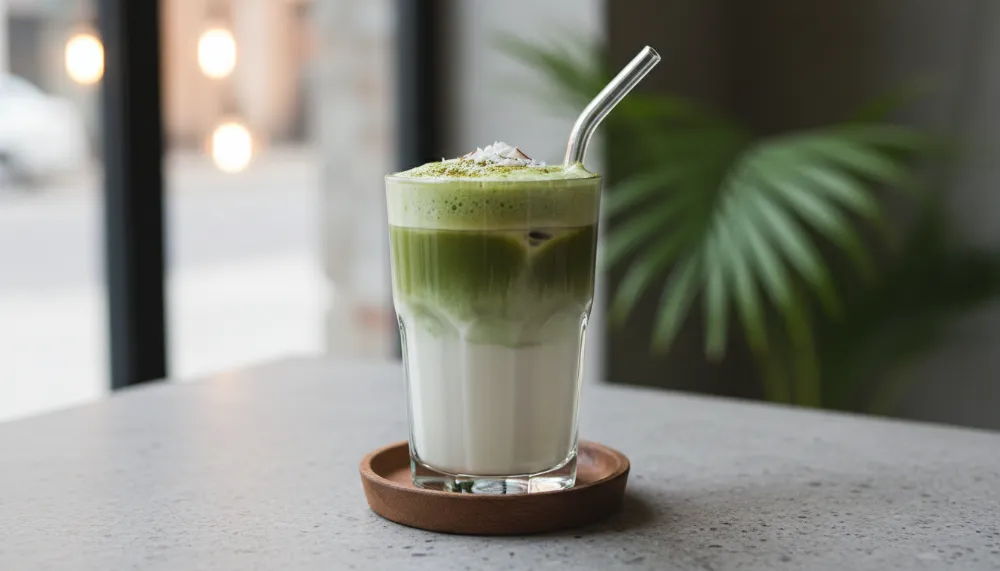

Experience the perfect harmony of earthy ceremonial green tea and creamy tropical flavors with this masterfully crafted Coconut Matcha Latte. This refreshing beverage offers a clean energy boost and a sophisticated flavor profile that elevates your daily routine.
The Ultimate Coconut Matcha Latte
Ingredients
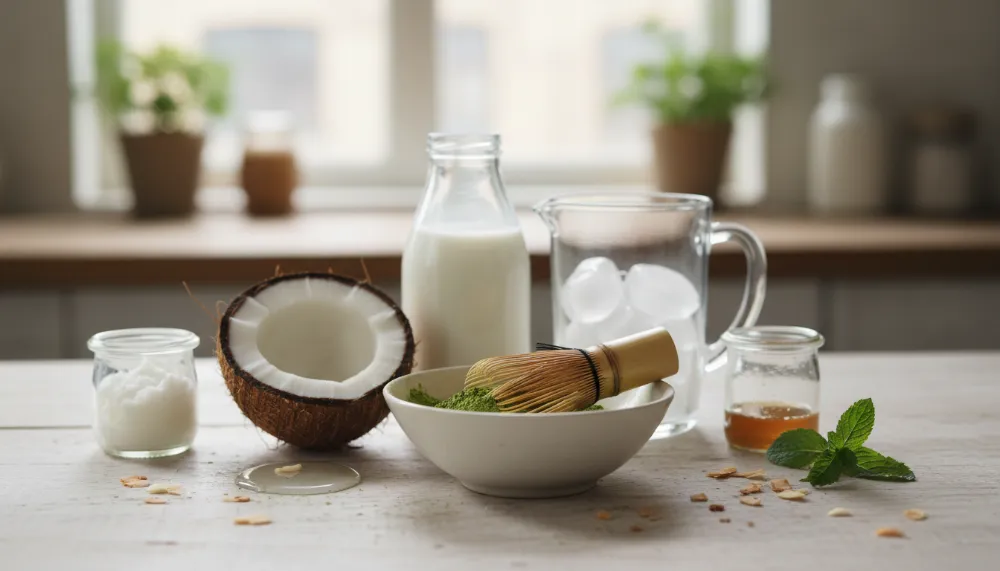
- 1 1.5 teaspoons Ceremonial Grade Matcha Powder
- 2 2 ounces Hot Water (175°F)
- 3 1 cup Unsweetened Full-Fat Coconut Milk
- 4 1 tablespoon Pure Maple Syrup or Honey
- 5 1/4 teaspoon Vanilla Extract
Instructions
- 1 Sift the matcha powder through a fine-mesh strainer into a wide bowl to remove all clumps.
- 2 Add the hot water (not boiling) and whisk vigorously in an M-motion using a bamboo whisk until a thick, frothy foam forms.
- 3 In a separate small saucepan, heat the coconut milk, sweetener, and vanilla over medium heat until steaming but not boiling.
- 4 Use a milk frother to aerate the coconut milk until it reaches your desired creaminess.
- 5 Pour the frothy coconut milk into a mug and top with the prepared matcha concentrate. Stir gently to create a beautiful swirl.
The Rich History and Cultural Journey of Matcha
To truly appreciate a Coconut Matcha Latte, one must understand the millennia of tradition behind its star ingredient. The story of matcha begins not in Japan, but in China during the Tang Dynasty, which spanned from the 7th to the 10th century. During this era, tea leaves were steamed and compressed into bricks for easier transport and storage. These bricks were then ground into a fine powder and whisked into hot water. This method of preparation was the precursor to the modern tea ceremony we recognize today.
By the 12th century, the Zen monk Eisai brought both tea seeds and the powdered preparation method to Japan. While the powdered tea tradition eventually faded in China, it flourished in Japan, becoming an integral part of Zen Buddhist practice. Monks used the tea to maintain focus and alertness during long hours of meditation. Over centuries, Japanese tea masters perfected the cultivation and processing of matcha, moving toward shade-grown techniques that increased chlorophyll and L-theanine levels, resulting in the vibrant green color and complex flavor we associate with high-quality matcha today.
The Coconut Matcha Latte is a contemporary evolution of this ancient tradition. While the classical tea ceremony remains a solemn and revered practice, the modern beverage world began experimenting with matcha in the late 1990s. The transition from a water-based ceremonial tea to a milk-based latte occurred primarily in Western tea houses. For instance, the Tao of Tea in Portland, Oregon, is often credited with early experiments in whisking matcha into frothy milk in 1997. As dairy alternatives like coconut milk gained popularity in the 2010s, the Coconut Matcha Latte emerged as a favorite among those seeking a creamy, tropical twist that complements the vegetal notes of the tea.
The Science of Flavor: Why Coconut and Matcha Pair Perfectly
The success of a Coconut Matcha Latte lies in the chemistry of flavor pairing. Matcha is known for its unique “umami” profile, a savory depth that is often described as grassy, oceanic, or vegetal. This complexity can sometimes be overwhelming for those new to green tea. Coconut milk, particularly the full-fat variety, provides a necessary counterpoint. The natural fats in coconut milk coat the palate, softening the astringency of the matcha and highlighting its natural sweetness.
When you prepare a Coconut Matcha Latte, you are essentially balancing three flavor pillars: the bitterness of the tea, the richness of the tropical fats, and the subtle floral notes found in high-grade powders. Furthermore, the medium-chain triglycerides (MCTs) found in coconut milk provide a stable base for the caffeine in matcha. This combination ensures that the energy boost is sustained over several hours, rather than the quick spike and crash associated with sugary coffee drinks. To achieve a perfectly smooth consistency, using a high-quality tool like the Ninja BN751 Professional Plus DUO Blender can help emulsify the coconut fats and matcha powder into a seamless, velvety liquid.
Nutritional Benefits of the Coconut Matcha Latte
A typical 12-ounce Coconut Matcha Latte is a nutritional powerhouse. Unlike many commercial lattes, this beverage is rich in antioxidants, specifically catechins. The most prominent among these is Epigallocatechin gallate (EGCG), which has been linked to improved heart health, weight management support, and reduced oxidative stress. When you consume matcha, you are consuming the entire leaf, meaning you receive 100% of its nutrient content compared to steeped tea bags.
The Coconut Matcha Latte also provides a unique mental state often called “calm alertness.” This is due to the presence of L-theanine, an amino acid that promotes relaxation without drowsiness. L-theanine works in synergy with caffeine to produce a focused, meditative energy. Additionally, coconut milk contributes essential minerals like magnesium and potassium, along with healthy fats that aid in the absorption of fat-soluble vitamins. If you are looking to pair your latte with a healthy snack, consider using the Cosori 9-in-1 TurboBlaze Air Fryer 6 Qt to roast some chickpeas or vegetables, providing a crunchy, nutrient-dense accompaniment to your tea.
Professional Variations and Flavor Infusions
While the classic Coconut Matcha Latte is exceptional on its own, professional baristas often use botanical infusions to create signature drinks. One popular variation is the Lavender-Coconut Matcha. By steeping culinary-grade lavender into the coconut milk or adding a touch of lavender syrup, you introduce a floral top note that cuts through the earthiness of the matcha. This is particularly popular in high-end urban cafes during the spring and summer months.
Another sophisticated option is the Spiced Matcha Latte. By adding a pinch of ground cardamom, ginger, and cinnamon, you can transform the drink into a warming, chai-inspired beverage. For those who prefer fruit-forward profiles, layering the drink with a fresh strawberry or mango puree at the bottom creates a stunning visual effect and a burst of seasonal flavor. To prepare ingredients for these variations, the Cuisinart 8 Cup Food Processor is an essential tool for quickly processing fresh fruits or spices during your morning prep.
The Art of the Whisk: Mastering the Technique
Preparation is everything when it comes to a Coconut Matcha Latte. The most common mistake is using boiling water, which scorches the delicate tea leaves and results in a bitter, unpleasant taste. Professionals always aim for a water temperature around 175°F (80°C). Another critical step is sifting. Matcha powder is incredibly fine and prone to clumping, sifting ensures that every particle is suspended in the water, creating a smooth concentrate.
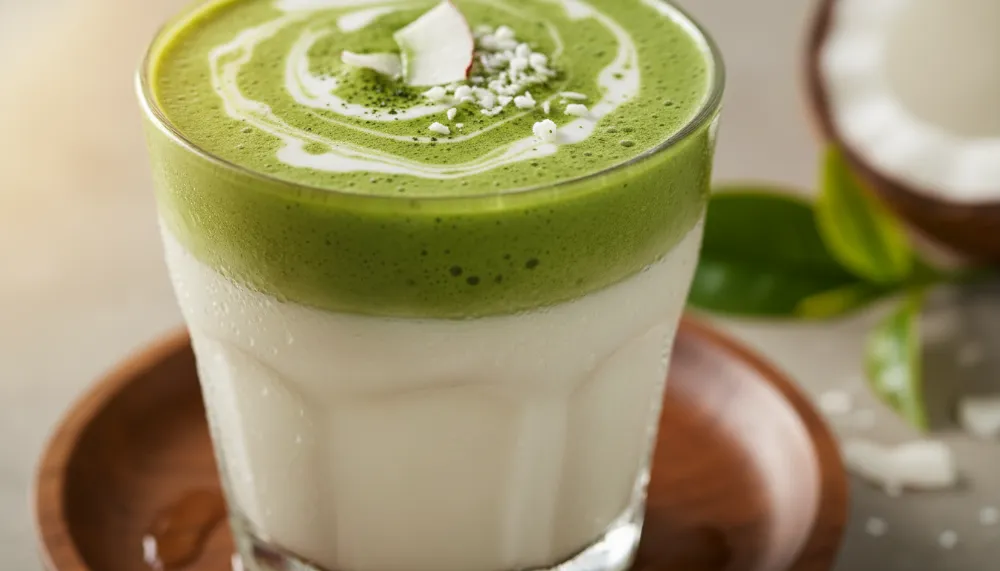
The whisking technique is equally important. Using a traditional bamboo whisk, or chasen, move your wrist in a vigorous “M” or “W” motion. Avoid circular motions, as they do not incorporate enough air to create the signature micro-foam. Once your matcha is frothy and vibrant green, you can introduce your steamed and aerated coconut milk. For an iced Coconut Matcha Latte, fill a glass with ice, pour in the sweetened coconut milk first, and then slowly pour the matcha over the back of a spoon. This technique, known as “floating,” creates a beautiful green layer on top of the white milk, making for a professional, cafe-style presentation.
Troubleshooting Common Matcha Mistakes
If your Coconut Matcha Latte tastes overly bitter, check your matcha grade. Ceremonial grade is intended for drinking and has a naturally sweeter, milder flavor, whereas culinary grade is designed for baking and has a much stronger, more astringent profile. If the texture is grainy, ensure you are sifting the powder and using water that is hot enough to dissolve the tea but not boiling.
If the coconut milk feels too heavy or overpowers the tea, try using a blend of light coconut milk and a splash of almond milk. This maintains the tropical flavor while thinning the consistency to a more traditional latte texture. Remember that the quality of your water also matters, using filtered water prevents mineral buildup from interfering with the delicate grassy notes of the matcha powder.
Conclusion: Elevating Your Morning Ritual
The Coconut Matcha Latte is more than just a trend, it is a sophisticated fusion of ancient tradition and modern nutritional science. By combining the antioxidant-rich power of Japanese matcha with the creamy, healthy fats of coconut milk, you create a beverage that nourishes both the body and the mind. Whether you enjoy it hot on a cold winter morning or iced as a summer refresher, mastering this recipe allows you to bring the luxury of a high-end tea house into your own kitchen.