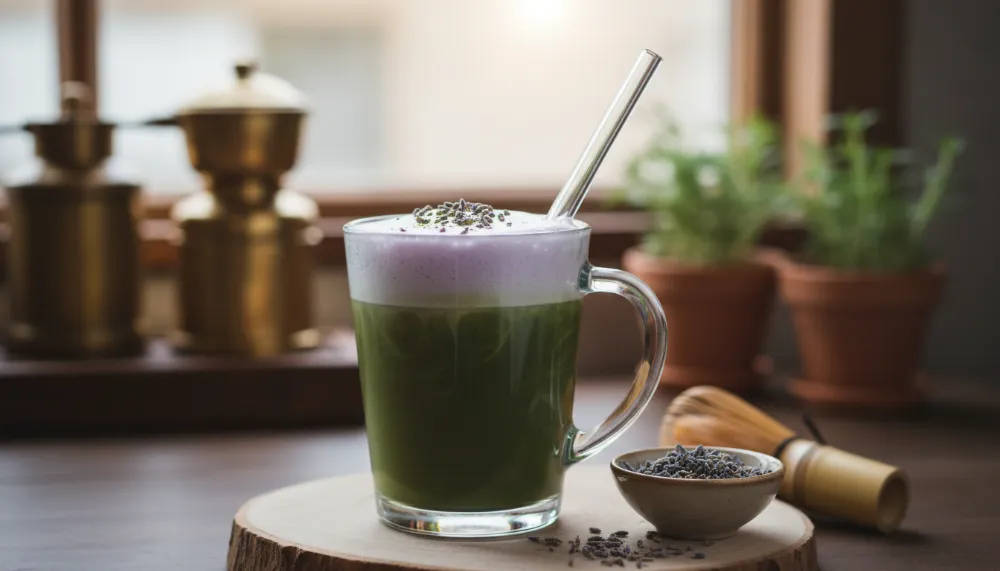

Experience the perfect harmony of earthy Japanese green tea and the delicate floral notes of lavender in this vibrant, soul-soothing Lavender Matcha Latte. It is the ultimate modern botanical beverage that balances sustained energy with a deep sense of culinary calm.
Signature Lavender Matcha Latte
Ingredients
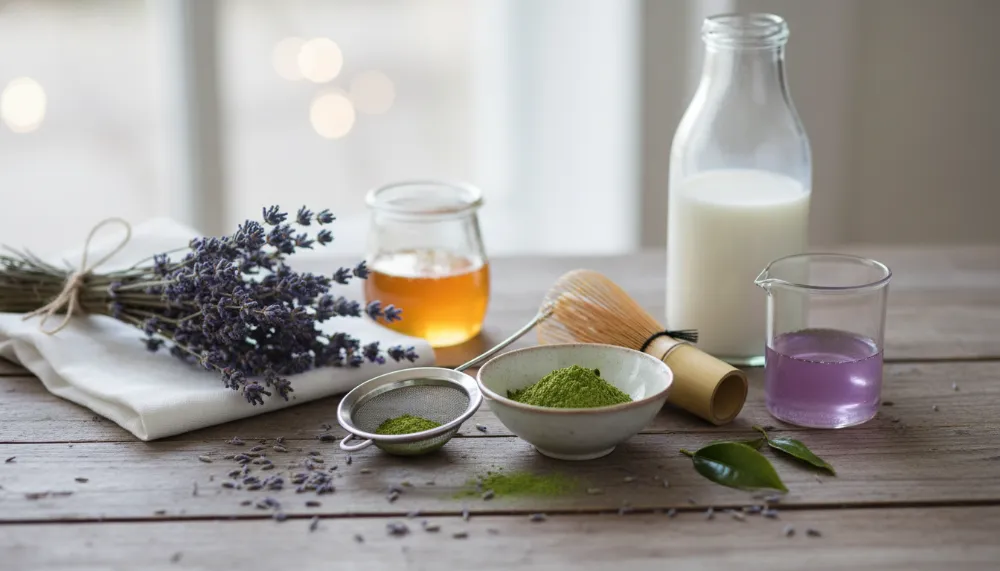
- 1 1.5 Teaspoons Ceremonial Grade Matcha Powder
- 2 1/4 Cup Hot Water (80°C/175°F)
- 3 1 Cup Oat Milk or Whole Milk
- 4 2 Tablespoons Lavender Simple Syrup (Alcohol-free)
- 5 1/4 Teaspoon Glycerin-based Vanilla Extract
- 6 Dried Culinary Lavender Buds for Garnish
Instructions
- 1 Sift the matcha powder into a small bowl to remove any clumps and ensure a smooth texture.
- 2 Add the hot water to the matcha and whisk in a zigzag motion using a bamboo whisk or electric frother until a thick, frothy foam forms on top.
- 3 In a separate small saucepan or milk frother, combine the milk, lavender syrup, and vanilla extract. Heat until steaming but not boiling.
- 4 Froth the milk mixture until it reaches a creamy, micro-foam consistency.
- 5 Pour the sweetened lavender milk into a large mug, then slowly pour the whisked matcha over the top to create a beautiful green and white layering.
- 6 Garnish with a pinch of dried culinary lavender and enjoy immediately.
The Fascinating History of the Lavender Matcha Latte
The Lavender Matcha Latte is a modern botanical beverage that fuses the ancient traditions of Japanese tea culture with the floral influences of European and American café heritage. This drink is characterized by its vibrant green hue, often topped with a lavender-tinted foam, creating a visual and sensory experience that balances earthiness with floral sweetness. To understand its allure, one must look at the two distinct culinary lineages that eventually merged.
Powdered green tea, or Matcha, originated in China but was refined into a cultural art form in Japan during the 12th Century. In 1191, the Zen monk Eisai brought tea seeds and the powdered preparation method to Japan, where it became central to the Japanese Tea Ceremony. It was traditionally consumed for its “calm alertness” during meditation, a state caused by the combination of caffeine and the amino acid L-theanine. For centuries, matcha remained a strictly ceremonial or traditional ingredient, far removed from the floral additives of Western tea culture.
Lavender’s journey into our cups is equally storied. Culinary use of lavender dates back to the Victorian Era in England, where it was used in floral teas, jellies, and even savory stews. However, the specific “Lavender Latte” trend emerged in the early 2000s within the Pacific Northwest’s third-wave coffee culture, specifically Seattle and Portland, where baristas began experimenting with botanical syrups to differentiate their menus.
The fusion of these two ingredients into the Lavender Matcha Latte we know today achieved global mainstream popularity between 2019 and 2024. While niche boutiques offered this pairing as early as 2019, high-end specialty shops first introduced “Lavender Honey Matcha” as a seasonal spring offering. This was later popularized on a massive scale by international café chains, who utilized lavender-infused powders and cold foams to create a layered aesthetic that took social media by storm.
Nutritional Profile: Why This Drink is a Powerhouse
A standard 16-ounce (473 ml) Lavender Matcha Latte made with oat milk and two pumps of syrup typically contains between 160 and 290 kcal. This variation depends heavily on the choice of sweetener and milk. Beyond the calories, the nutritional benefits are significant, particularly due to the presence of high-quality matcha.
One of the most praised components is L-Theanine, an amino acid that promotes relaxation without drowsiness. When paired with the 60 to 80mg of caffeine found in a serving of matcha, it provides a sustained energy boost without the jittery “crash” often associated with coffee. Additionally, matcha is rich in EGCG (Epigallocatechin gallate), a potent antioxidant that supports cellular health. For those looking to increase their protein intake, many baristas now offer a boost by whisking in beef-derived protein powders or chicken-derived collagen peptides into the milk, which integrates seamlessly without altering the floral profile. It is essential to ensure these additives are free from any pork-derived stabilizers.
Selecting Your Ingredients: Quality is Key
To recreate a cafe-quality Lavender Matcha Latte at home, you must start with the right ingredients. Ceremonial grade matcha is non-negotiable for this recipe. Unlike culinary grade, which is often bitter and dull in color, ceremonial grade is made from the youngest tea leaves, resulting in a vibrant neon green color and a naturally sweet, umami flavor. When purchasing your matcha, ensure it is sourced from reputable regions like Uji or Nishio in Japan.
For the lavender component, using a high-quality, alcohol-free syrup is vital. Many commercial syrups use alcohol-based extracts which can leave a medicinal aftertaste. Instead, look for glycerin-based lavender flavors or make your own syrup by simmering water, sugar, and culinary-grade dried lavender. For the ultimate smooth texture, you can use the Ninja BN751 Professional Plus DUO Blender to emulsify your lavender syrup with the milk for a perfectly consistent flavor profile.
Professional Barista Techniques for the Perfect Latte
The difference between a mediocre home-made drink and a professional Lavender Matcha Latte lies in the technique. First, water temperature is critical. Never use boiling water, as it will scorch the delicate tea leaves and release a bitter, astringent flavor. Aim for 80°C (175°F). If you do not have a temperature-controlled kettle, let your boiling water sit for two minutes before pouring.
Second, the whisking process is an art. If you are preparing a large batch of lavender-infused milk, the Cuisinart 8 Cup Food Processor is essential for fast chopping and blending of lavender buds into a fine sugar base if you are making a dry lavender sugar mix for your pantry. For the matcha itself, use a traditional bamboo whisk (Chasen) or a high-speed electric frother. The goal is to create “micro-foam,” a texture of bubbles so small they are nearly invisible, giving the latte a velvety mouthfeel.
Professional Flavor Variations
Master baristas often push the boundaries of the Lavender Matcha Latte with these elevated variations:
- The London Fog Matcha: A hybrid of the classic London Fog and matcha. It uses a base of Earl Grey tea concentrate, mixed with matcha and lavender syrup, resulting in a complex bergamot and floral finish.
- Citrus-Botanical Infusion: Incorporating lemon zest or a drop of orange blossom water (ensure it is alcohol-free) into the lavender syrup. The acidity of the citrus cuts through the creaminess of the milk and the umami of the matcha.
- Honey-Lavender Foam: Instead of sugar-based syrups, baristas use a honey-lavender reduction. The honey provides a deeper, floral sweetness that complements the grassy notes of high-grade matcha.
- Salty Lavender Matcha: A pinch of sea salt is added to the lavender cold foam. The salt acts as a flavor enhancer, intensifying the sweetness of the lavender while tempering any bitterness in the green tea.
Equipment and Preparation Tips
To truly master your beverage game, having the right tools in your kitchen makes a world of difference. While the Cosori 9-in-1 TurboBlaze Air Fryer 6 Qt is typically used for roasting chickpeas and vegetables, it can actually be used on its lowest dehydrate setting to dry fresh lavender from your garden, ensuring you always have the freshest floral garnish available for your lattes.
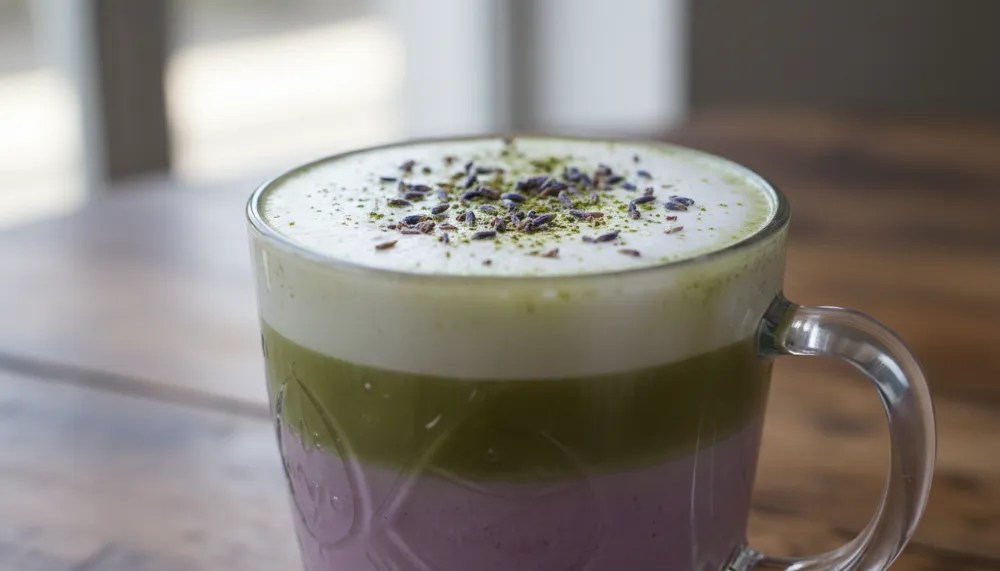
When preparing your Lavender Matcha Latte, always sift your matcha powder. Matcha is highly susceptible to clumping due to static electricity, and even the most vigorous whisking cannot always break those clumps apart once they hit the water. Sifting ensures that every sip is smooth and free of powdery explosions.
Frequently Asked Questions
Can I make this drink iced?
Absolutely. To make an Iced Lavender Matcha Latte, whisk the matcha with a small amount of hot water first to dissolve it, then fill a glass with ice and your lavender-sweetened milk. Pour the matcha concentrate over the top for a stunning marble effect.
What is the best milk for a Lavender Matcha Latte?
Oat milk is widely considered the gold standard for matcha lattes because its natural creaminess and slight grain-like sweetness complement the earthy notes of the tea without overpowering the delicate lavender floral notes. Coconut milk also works well for a more tropical, decadent version.
How do I store my matcha?
Matcha is very sensitive to light, heat, and oxygen. Store your matcha in an airtight, opaque tin in a cool, dark place. For maximum freshness, some enthusiasts even store their opened matcha tins in the refrigerator.