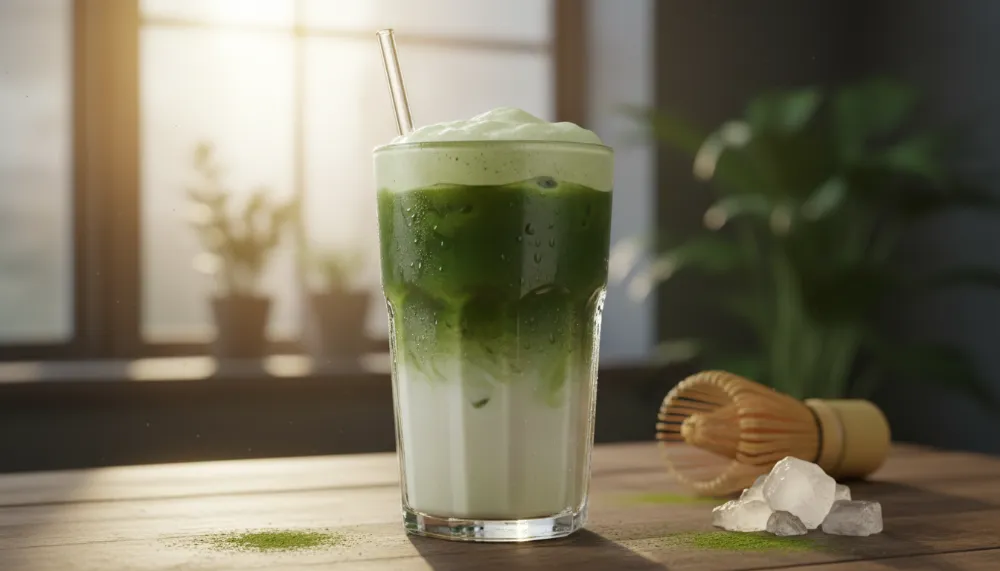

Experience the vibrant energy and refreshing taste of a perfectly whisked Iced Matcha Latte, the ultimate chilled beverage for a calm yet focused boost. This professional-grade recipe brings the sophisticated flavors of a high-end cafe directly to your kitchen with ease.
Pro-Level Iced Matcha Latte
Ingredients
- 1 1.5 teaspoons Ceremonial Grade Matcha Powder
- 2 2 tablespoons hot water (80°C/175°F)
- 3 1 tablespoon maple syrup or honey
- 4 1 cup oat milk or whole dairy milk
- 5 1/4 teaspoon alcohol-free vanilla bean paste
- 6 1.5 cups large ice cubes
Instructions
- 1 Sift the matcha powder into a small bowl to remove all lumps.
- 2 Add the hot water and whisk vigorously in a zig-zag motion until a thick, frothy paste forms.
- 3 In a tall glass, combine the milk, sweetener, and vanilla bean paste, stirring until well combined.
- 4 Fill the glass to the top with ice cubes.
- 5 Slowly pour the whisked matcha over the ice to create a beautiful layered effect. Stir gently before drinking.
The Rich History of Matcha: From Zen Temples to Modern Cafes
The Iced Matcha Latte is more than just a trend, it is the modern evolution of a 900-year-old tradition. Originally brought to Japan from China by the monk Eisai in 1191, matcha was the cornerstone of the Japanese tea ceremony. For centuries, it was consumed as a hot, thick tea, prized for its ability to keep monks focused during long meditation sessions. The transition to the “latte” format happened significantly later, gaining traction in the late 1990s and early 2000s when Western cafes began experimenting with tea-based milk drinks.
The beauty of the Iced Matcha Latte lies in its duality. It honors the meticulous processing of the Camellia sinensis plant while embracing the creamy, refreshing preferences of contemporary coffee shop culture. Today, it stands as a symbol of the wellness movement, offering a cleaner energy boost compared to the jittery highs and crashing lows of coffee. By understanding this history, we appreciate the labor-intensive process behind every scoop of powder.
Understanding Matcha Quality: Ceremonial vs. Culinary
When preparing an Iced Matcha Latte, the quality of your powder is the single most important factor. Many people are turned off by matcha because they have tasted low-quality versions that are bitter, brown, and grassy. In the professional world, we categorize matcha into two primary grades: Ceremonial and Culinary. For a drink where matcha is the star, ceremonial grade is essential.
Ceremonial grade matcha is made from the youngest tea leaves, which are shaded for several weeks before harvest. This shading process boosts chlorophyll and L-theanine levels, resulting in a vibrant, neon-green color and a naturally sweet, umami flavor. Culinary grade, while useful for baking, is made from older leaves and has a much more astringent profile that can overwhelm the milk in an Iced Matcha Latte. If your powder looks dull or yellow, it is likely oxidized or of lower quality.
The Science of Energy: Why Matcha Beats Coffee
The Iced Matcha Latte provides a unique physiological experience often described as “calm alertness.” This is due to the synergistic relationship between caffeine and L-Theanine. While a standard latte contains roughly 55 to 80 milligrams of caffeine, it also contains high concentrations of L-Theanine, an amino acid that crosses the blood-brain barrier to promote relaxation.
In coffee, caffeine is released rapidly, causing a spike in adrenaline. In matcha, the L-Theanine slows the absorption of caffeine, leading to a sustained release of energy over 4 to 6 hours. This prevents the dreaded “caffeine crash” and supports cognitive function. For those who need to remain productive throughout the afternoon, an Iced Matcha Latte is the superior choice for steady mental clarity.
Antioxidant Powerhouse
Matcha is incredibly rich in catechins, specifically EGCG (epigallocatechin gallate). Because you are consuming the entire ground leaf rather than just an infusion, you receive 137 times more antioxidants than a standard cup of brewed green tea. These compounds are known for supporting metabolic health and reducing oxidative stress in the body, making the Iced Matcha Latte a functional beverage as much as a delicious one.
Essential Tools for the Perfect Matcha
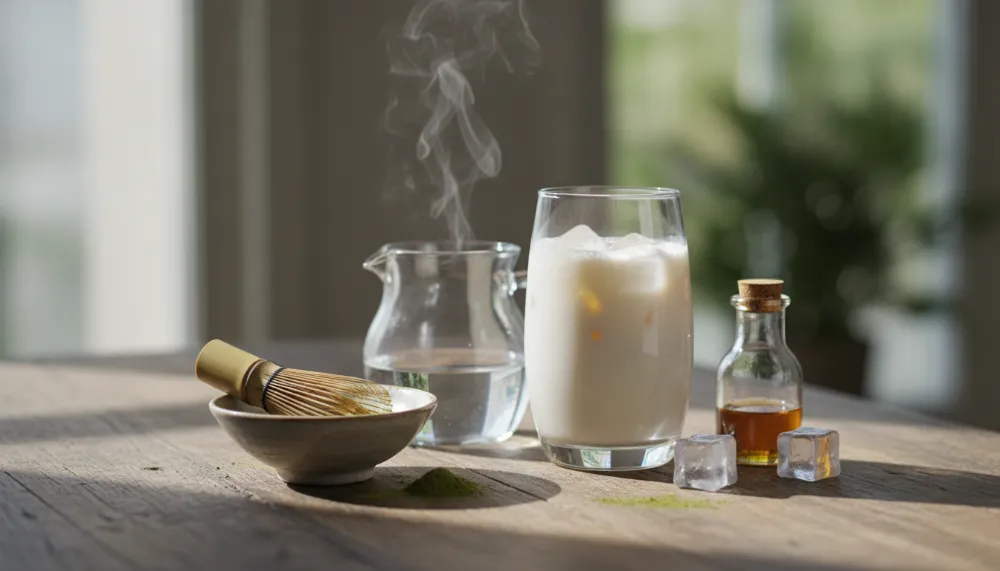
To achieve that signature silky texture, you need the right equipment. While a traditional bamboo whisk (chasen) is the gold standard for creating fine micro-foam, modern technology has made the process even easier. For those who prepare lattes for the whole family, using a high-powered device is a game changer. The Ninja BN751 Professional Plus DUO Blender (https://amzn.to/3LCDyNR) is perfect for emulsifying the matcha and milk into a super-frothy consistency with its 1000W motor, ensuring no clumps remain.
If you are focusing on meal prepping a complete healthy lunch to go with your drink, consider how your kitchen tools work together. While your matcha is whisking, the Cosori 9-in-1 TurboBlaze Air Fryer 6 Qt (https://amzn.to/4hRWmVq) roasts chickpeas and vegetables perfectly with a large family capacity, providing a crunchy, savory balance to your sweet latte. Furthermore, if you are making fruit-based variations like a Strawberry Matcha, the Cuisinart 8 Cup Food Processor (https://amzn.to/47Nhbg8) is essential for fast chopping and slicing during meal prep, allowing you to create fresh fruit purees in seconds.
The Art of Professional Layering
We have all seen the stunning photos of Iced Matcha Lattes with a distinct green layer floating on top of white milk. This isn’t just for show, it actually affects the flavor profile as you drink it. To achieve this, baristas rely on liquid density. By adding a sweetener like maple syrup or honey to the milk, you increase the milk’s specific gravity, making it “heavier” than the matcha-water mixture.
When you pour the whisked matcha slowly over the ice, the ice cubes act as baffles, breaking the fall of the liquid and allowing it to settle gently on top of the dense milk. This creates a gradient that is visually striking. As you sip through a straw, you experience the creamy sweetness of the milk first, followed by the bold, earthy notes of the matcha, providing a complex sensory experience.
Milk Pairings and Flavor Innovations
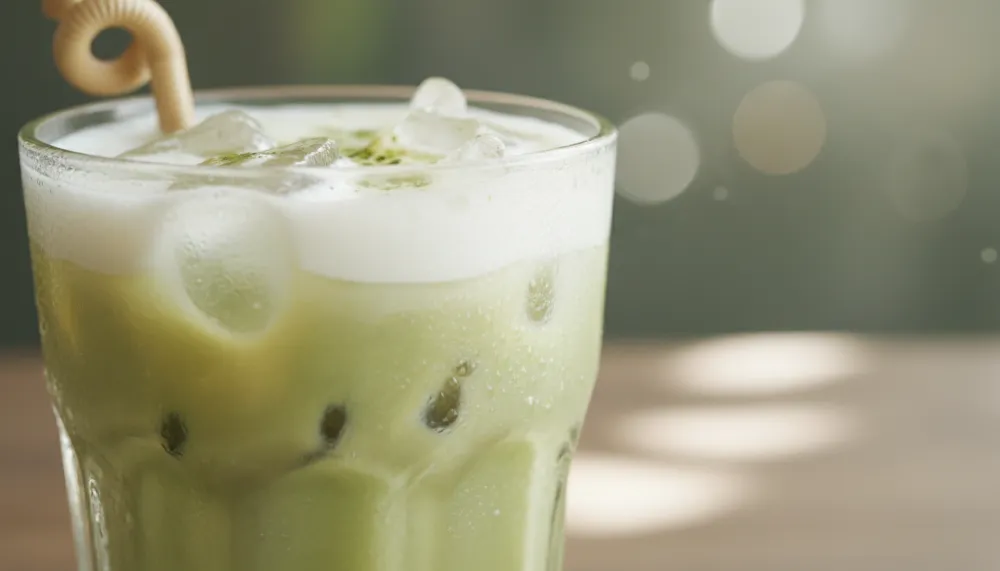
The choice of milk can drastically change the character of your Iced Matcha Latte. While whole dairy milk provides a classic, rich mouthfeel, plant-based alternatives have become the industry standard for matcha. Oat milk is the most popular choice because its natural, cereal-like sweetness complements the “grassy” notes of the green tea without overpowering them. Coconut milk offers a more tropical, indulgent profile, while almond milk provides a light, nutty finish.
For those looking to boost their protein intake, many cafes now offer a “Collagen Matcha.” By whisking in beef-derived collagen peptides, you can add a significant amount of protein and a creamier texture without changing the flavor. This is a fantastic way to turn your morning beverage into a more satiating snack that supports skin and joint health.
Creative Variations
- Vanilla Bean Matcha: Use alcohol-free vanilla bean paste rather than extracts to add a floral, aromatic depth.
- Strawberry Fields: Place a layer of fresh strawberry puree (made in your food processor) at the very bottom of the glass before adding milk.
- Lavender Iced Matcha: Infuse your maple syrup with dried lavender buds for a calming, botanical twist that is perfect for summer afternoons.
- Ube Layered Latte: A purple yam base creates a stunning tri-color drink that is as delicious as it is photogenic.
Troubleshooting Common Matcha Mistakes
If your Iced Matcha Latte tastes bitter or has a sandy texture, it is usually due to one of three things: water temperature, clumping, or powder quality. Never use boiling water to whisk your matcha. Water at 100°C will scald the delicate leaves, releasing excess tannins and creating a harsh, bitter flavor. Aim for roughly 80°C (175°F) for the best extraction.
Clumping is the most common complaint among home baristas. Because matcha is ground so finely, the particles tend to stick together through static electricity. Always sift your matcha through a fine-mesh strainer before adding water. This ensures that every particle is hydrated, resulting in a smooth, velvety drink rather than one with pockets of dry powder. Finally, ensure your powder is stored in an airtight, opaque container in a cool place. Matcha is highly sensitive to light and oxygen, which can turn it brown and stale in a matter of weeks.
Conclusion: Elevating Your Daily Ritual
The Iced Matcha Latte is more than just a caffeinated beverage, it is a ritual that encourages us to slow down and appreciate the process. From the careful sifting of the emerald powder to the rhythmic whisking that creates the perfect froth, every step is an act of mindfulness. By using high-quality ceremonial matcha and professional techniques, you can transform a simple glass of milk and tea into a gourmet experience that rivals the world’s best cafes.
Whether you enjoy it as a morning wake-up call or a mid-afternoon refreshment, the Iced Matcha Latte provides a sophisticated, health-conscious alternative to traditional coffee. With the right tools and a bit of practice, you will soon be mastering the art of the perfect pour every single time.