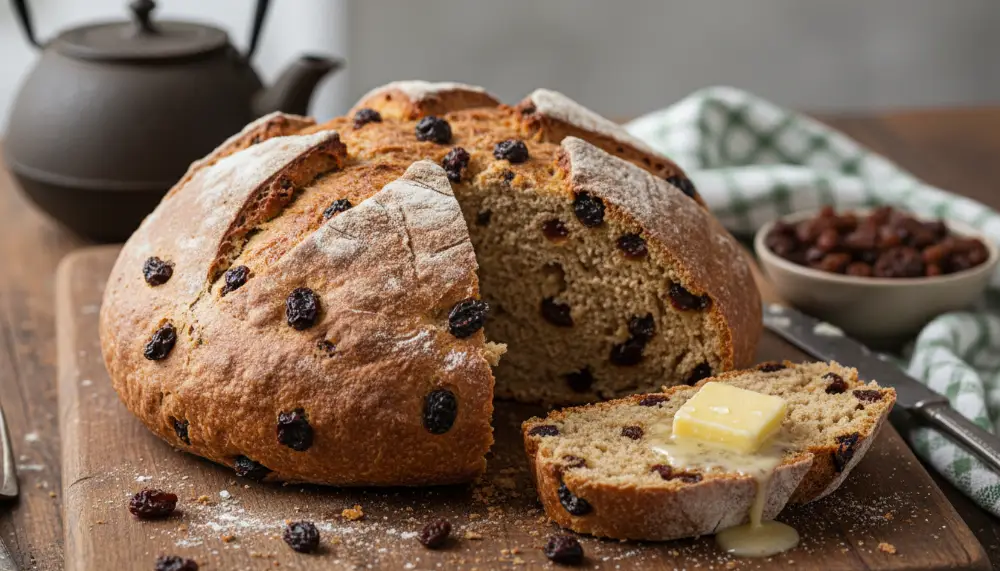

Experience the rustic soul of a traditional farmhouse kitchen with this authentic Irish Soda Bread with Raisins, a dense, slightly sweet loaf that requires no yeast and zero rising time. Known affectionately in Ireland as the Spotted Dog, this heritage bread is the perfect marriage of crunchy crust and tender, fruit-studded crumb.
Traditional Irish Soda Bread with Raisins
Ingredients
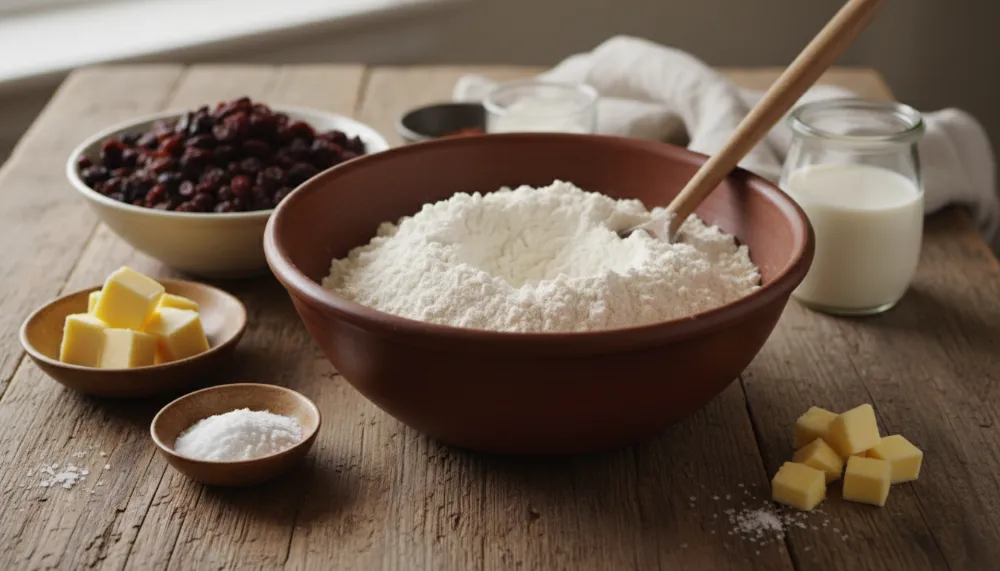
- 1 4 cups All-Purpose Flour (plus extra for dusting)
- 2 4 tablespoons Granulated Sugar
- 3 1 teaspoon Baking Soda
- 4 1 teaspoon Salt
- 5 4 tablespoons Cold Unsalted Butter (cubed)
- 6 1 cup Dark Raisins (soaked in warm apple juice for 10 minutes)
- 7 1 3/4 cups Cold Buttermilk
- 8 1 Large Egg (optional, for extra richness)
Instructions
- 1 Preheat your oven to 400°F (200°C) and lightly grease a large baking sheet or cast-iron skillet.
- 2 In a large bowl, whisk together the flour, sugar, baking soda, and salt until thoroughly combined.
- 3 Use a pastry cutter or your fingertips to rub the cold butter into the flour until the mixture resembles coarse crumbs.
- 4 Drain the raisins and stir them into the dry mixture. Create a well in the center of the flour.
- 5 Whisk the buttermilk and egg together, then pour into the well. Stir with a wooden spoon until a shaggy dough forms.
- 6 Turn the dough onto a floured surface and gently knead just 4 or 5 times to shape it into a round loaf. Do not overwork!
- 7 Place on the baking sheet. Cut a deep ‘X’ into the top (about 1 inch deep) to allow the center to cook.
- 8 Bake for 40-45 minutes until golden brown and the loaf sounds hollow when tapped on the bottom. Cool on a wire rack.
The Fascinating History of Irish Soda Bread with Raisins
While the four-ingredient staple is a symbol of Irish resilience, Irish Soda Bread with Raisins represents the celebratory side of Gaelic culture. Historically, the addition of fruit and sugar transformed the daily loaf into what was known as “Spotted Dog” or “Railway Bread.” During the 19th century, particularly after the devastating Great Famine, baking soda became the primary leavening agent because yeast was often unavailable or too expensive for rural households. The chemical reaction between the alkaline bicarbonate of soda and the acidic lactic acid in buttermilk provided the lift needed to create a hearty loaf without hours of proofing.
The term “Spotted Dog” is a playful reference to the dark raisins appearing as spots against the pale, floury crumb of the bread. In different regions of Ireland, this was considered a “tea cake” rather than a meal accompaniment. For many, it was a reward after a long day of harvest or a special treat served to visitors on a Sunday afternoon. Folklore even suggests that “Railway Bread” earned its name because there was intended to be a raisin for every station on the train line, ensuring the traveler never went hungry between stops.
The Science Behind the Perfect Rise
Unlike sourdough or brioche, Irish Soda Bread with Raisins relies entirely on chemistry rather than biology. When you mix baking soda with buttermilk, carbon dioxide bubbles are released instantly. This is why professional bakers emphasize the importance of speed and a light touch. If you knead the dough too much, you knock out the very bubbles that make the bread rise, resulting in a brick-like texture. For those who want to ensure the perfect consistency every time, using a high-quality tool like the Cuisinart 8 Cup Food Processor can help you cut the cold butter into the flour quickly without warming it with your hands, which keeps the crumb tender and flaky.
Why Buttermilk is Non-Negotiable
Buttermilk is the lifeblood of this recipe. It isn’t just for flavor, it is the activator. The acidity of the buttermilk reacts with the baking soda to provide the leavening. Traditionally, this was the liquid left over after churning butter, naturally slightly soured. In modern kitchens, if you find yourself without buttermilk, you can mimic the effect by adding a tablespoon of lemon juice or white vinegar to regular milk and letting it sit for ten minutes. However, for the most authentic Irish Soda Bread with Raisins, whole-fat buttermilk provides a richness that substitutes cannot fully replicate.
Professional Flavor Variations for the Modern Kitchen
While the traditional Spotted Dog is perfection in its simplicity, many contemporary chefs add their own signature twists. To elevate your Irish Soda Bread with Raisins, consider these professional variations:
- The Citrus Zest Lift: Rub the zest of one large orange into the sugar before mixing. The oils in the zest provide a bright, floral aroma that complements the sweet raisins beautifully.
- The Savory Contrast: Instead of making it purely sweet, add a handful of toasted sunflower seeds or even finely diced, cooked beef brisket for a hearty, savory version. Remember, to keep this authentic, avoid all pork products and stick to high-quality beef or chicken if adding meat.
- The Triple Threat: Use a combination of dark raisins, golden sultanas, and dried currants for a complex texture and varying levels of sweetness in every bite.
How to Serve and Pair Your Loaf
Irish Soda Bread with Raisins is best enjoyed slightly warm, slathered in salted butter. Because the bread is dense and sturdy, it holds up remarkably well to thick spreads. For a modern gourmet twist, use the Ninja BN751 Professional Plus DUO Blender to whip up a honey-tahini spread or a fresh fruit compote to serve alongside. The 1000W motor makes short work of nuts and seeds, allowing you to create a smooth, restaurant-quality accompaniment in seconds.
If you have leftovers the next day, don’t worry. This bread makes some of the best French toast imaginable. Simply slice it thick, dip it in an egg and cinnamon mixture, and fry it until golden. Alternatively, you can use the Cosori 9-in-1 TurboBlaze Air Fryer 6 Qt to toast individual slices. The rapid air circulation ensures a perfectly crisp exterior while keeping the raisins from drying out too much, making it a faster and more efficient method than a standard oven for small batches.
Common Pitfalls and Pro-Tips
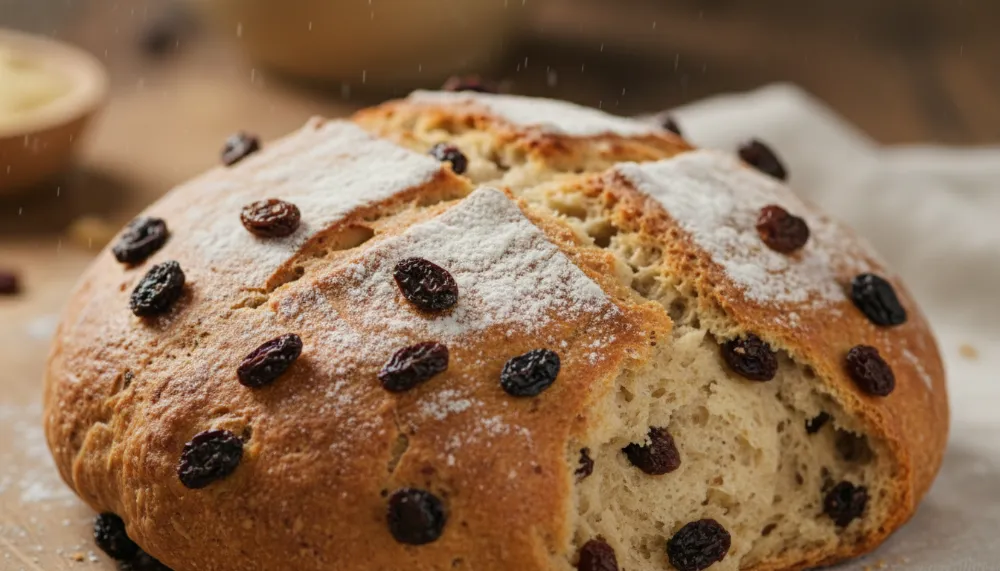
One of the biggest mistakes beginners make is over-measuring the flour. If you pack the flour into the measuring cup, you will end up with a dry, crumbly loaf. Always fluff the flour with a spoon first, then scoop it into the cup and level it off with a knife. Another essential tip for the perfect Irish Soda Bread with Raisins is the “X” on top. This isn’t just for decoration or folklore (some say it “lets the fairies out”), it actually serves a structural purpose. The deep cut allows heat to penetrate the thickest part of the dough, ensuring the center is fully baked by the time the crust is golden brown.
Alcohol Substitutes for Plumping Fruit
Many older recipes suggest soaking raisins in whiskey or rum. However, for a fantastic non-alcoholic alternative, soak your raisins in strong, hot black tea or fresh apple juice. This hydrates the fruit, making them burst with moisture in the oven, and adds a layer of tannic depth or fruity sweetness that mimics the complexity of spirits without the alcohol content.
Nutritional Information and Storage
A standard slice of Irish Soda Bread with Raisins contains approximately 160 calories and is a good source of iron and calcium, thanks to the buttermilk and raisins. Because it contains no preservatives, this bread is best eaten within two days. To store, wrap it tightly in a clean tea towel or beeswax wrap. Avoid plastic bags, as they can cause the crust to become soft and gummy. If you want to freeze it, slice the loaf first and freeze the slices individually, then toast them directly from the freezer for a quick and easy breakfast.
Whether you are celebrating a specific holiday or simply want a comforting bake for a rainy Tuesday, this Irish Soda Bread with Raisins is a timeless classic. It connects us to a history of simple ingredients and clever techniques, proving that you don’t need fancy equipment or rare ingredients to create something truly extraordinary. Grab your flour, find your raisins, and start baking this iconic piece of Irish history today.