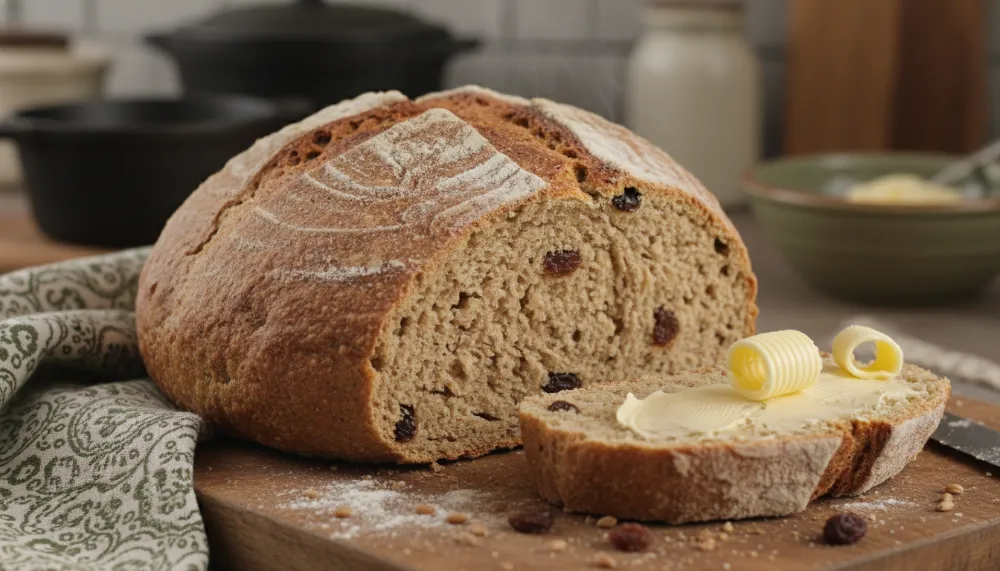

This rustic Whole Wheat Irish Soda Bread is a hearty, no-knead masterpiece that delivers a crusty exterior and tender crumb in under an hour. It is the perfect beginner-friendly loaf that brings authentic, old-world flavor to your modern kitchen table.
Authentic Whole Wheat Irish Soda Bread
Ingredients
- 1 3 cups (360g) Whole Wheat Flour
- 2 1 cup (120g) All-Purpose Flour
- 3 1.5 teaspoons Baking Soda
- 4 1 teaspoon Salt
- 5 1.75 cups (420ml) Real Buttermilk
- 6 2 tablespoons Honey or Brown Sugar (optional)
Instructions
- 1 Preheat your oven to 400°F (200°C) and lightly grease a baking sheet or cast-iron skillet.
- 2 In a large mixing bowl, whisk together the whole wheat flour, all-purpose flour, salt, and baking soda.
- 3 Make a well in the center and pour in the buttermilk (and honey, if using).
- 4 Use a wooden spoon or your hands to gently fold the mixture until a shaggy dough forms, do not overmix.
- 5 Turn onto a floured surface, shape into a 1.5-inch thick round, and cut a deep cross (1 inch deep) into the top.
- 6 Bake for 35-45 minutes until the loaf sounds hollow when tapped on the bottom. Cool on a wire rack.
The Fascinating History of Whole Wheat Irish Soda Bread
To truly appreciate a loaf of Whole Wheat Irish Soda Bread, one must understand its humble and resilient beginnings. Often referred to in Ireland as “Brown Bread” or “Wheaten Bread,” this dense, hearty loaf is a testament to culinary ingenuity under pressure. The origin of Irish soda bread is rooted in necessity and geographic constraints during the early to mid 19th century, a time when yeast was expensive and difficult to maintain.
While the concept of using “pearl ash” for leavening was documented by Native Americans, bicarbonate of soda was introduced to Ireland in the 1830s. This was a revolutionary development for Irish bakers because the local wheat was “soft” wheat, low in gluten and unsuitable for yeast-based rising. Unlike the hard wheat found in the Americas or continental Europe, Irish wheat couldn’t produce the stretchy strands required for traditional fermented breads. The chemical reaction between baking soda and acidic buttermilk provided the lift that yeast could not.
During the famine years (1845, 1852), Irish families lived in extreme poverty. The recipe became a staple because it only required four inexpensive, readily available ingredients: wholemeal flour, sour milk (or buttermilk), salt, and baking soda. This simplicity allowed families to bake daily bread over open hearths without the need for sophisticated ovens. Traditionally, the bread was baked in a “bastible,” a heavy iron pot with a lid that sat on the embers of an open hearth. The signature cross cut into the top allowed the thick dough to expand and was also culturally believed to “let the fairies out” or ward off evil, though its practical purpose was to ensure even heat distribution through the thick center.
Nutritional Excellence of Wholemeal Grains
Whole wheat Irish soda bread is nutritionally superior to its white flour counterparts due to the inclusion of the wheat bran and germ. When you consume a slice of authentic brown bread, you are getting the full spectrum of the grain’s benefits, which are often stripped away in highly processed commercial loaves. For those looking to optimize their meal prep, using a Cuisinart 8 Cup Food Processor is essential for fast chopping and slicing during meal prep, especially when preparing large batches of these nutrient-dense ingredients.
On average, a 100g serving of Whole Wheat Irish Soda Bread contains approximately 250, 290 calories. However, it is the fiber content that truly stands out, ranging from 4g to 7g per serving. This high fiber content supports digestive health and provides a lower glycemic index compared to white bread, keeping you fuller for longer. Furthermore, the bread is a decent source of plant-based protein (6g, 9g), thanks to the combination of whole grains and buttermilk.
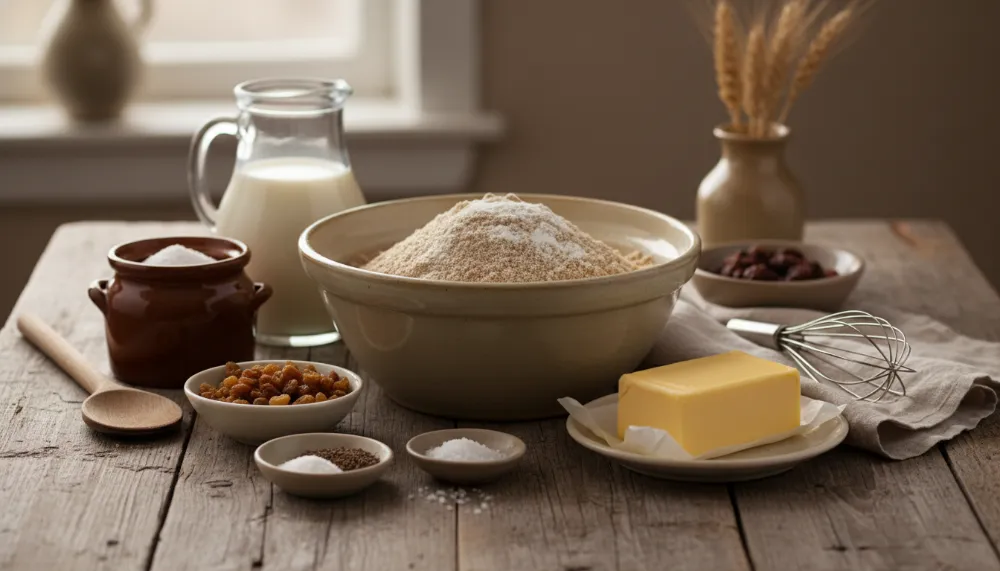
From a micronutrient perspective, this bread is naturally rich in B vitamins, particularly B1, B3, and B6. These are vital for energy metabolism and cognitive function. It also provides essential minerals like Magnesium and Iron, roughly 10, 15% of the Daily Value. Because the traditional recipe contains very little added fat (typically 2g, 5g), it remains a heart-healthy choice for those monitoring their lipid profiles. If you are serving this bread alongside a hearty vegetable spread, the Ninja BN751 Professional Plus DUO Blender is perfect for tahini sauce and harissa paste with its 1000W motor, adding even more healthy fats and minerals to your meal.
The Professional Science of the Rise
Understanding the science behind Whole Wheat Irish Soda Bread is key to achieving a professional-grade crumb. Unlike yeast breads that require hours of proofing, soda bread relies on an immediate chemical reaction. The lactic acid in the buttermilk reacts with the alkaline baking soda (sodium bicarbonate) to create carbon dioxide bubbles. These bubbles are trapped by the flour’s proteins, causing the bread to rise instantly in the heat of the oven.
This is why speed is of the essence. Once the liquid hits the dry ingredients, the timer starts. Over-handling the dough will pop those precious bubbles and develop the gluten too much, resulting in a loaf that is more like a brick than a bread. Professional bakers recommend a “light touch,” barely bringing the ingredients together into a shaggy mass before shaping and baking. To ensure your oven is at the perfect temperature for that initial spring, many modern cooks use the Cosori 9-in-1 TurboBlaze Air Fryer 6 Qt, which roasts chickpeas and vegetables perfectly with a large family capacity, often serving as a secondary convection source for smaller “mini-loaves” of soda bread.
Professional Flavor Variations: Savory and Herbaceous
While the classic four-ingredient loaf is iconic, professional bakers often enhance the basic wheaten dough with textures and savory notes. For a Cheddar and Scallion variation, fold in 100g of aged white cheddar and a handful of finely chopped scallions. To add a deep, umami base without alcohol, replace a portion of the buttermilk with chilled beef broth. This adds a sophisticated saltiness that pairs beautifully with the nutty whole wheat.
Another popular professional variation is Sundried Tomato and Feta. Incorporate chopped sundried tomatoes and crumbled feta cheese directly into the dry mix. If you find yourself without buttermilk, you can use a tablespoon of white vinegar mixed into regular milk to ensure a sharp, tangy rise. This acidity is non-negotiable for the chemical reaction required.
Professional Flavor Variations: Fruity and Nutty
For those who prefer a slightly sweeter slice, the “Spotted Dog” is a traditional Irish variant that includes currants or raisins and a tablespoon of sugar. To elevate this, professionals often soak the dried fruit in apple juice or orange juice instead of traditional spirits to plump them up and add natural acidity. This keeps the fruit moist during the high-heat baking process.
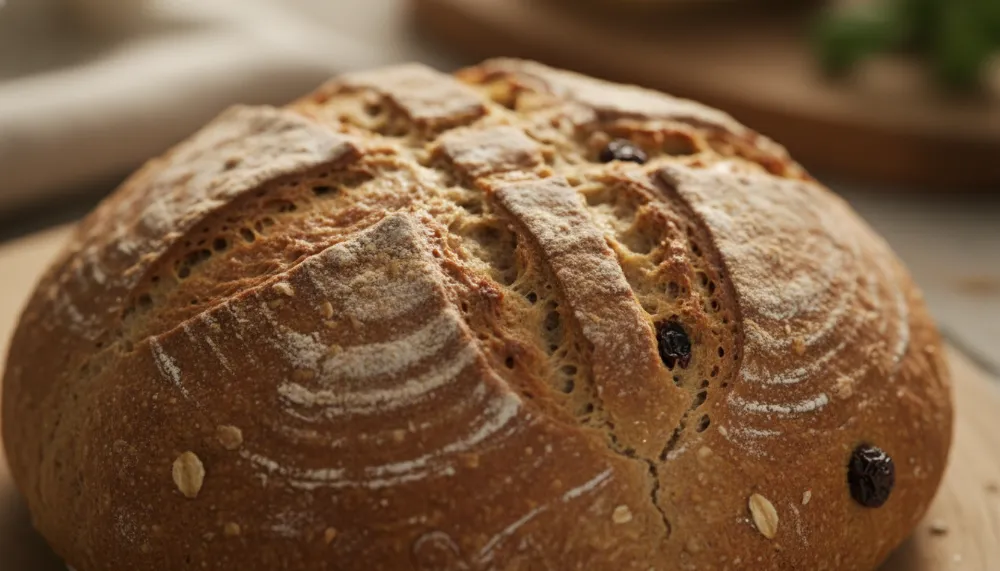
Fig and Toasted Walnut is another sophisticated choice. The earthiness of the whole wheat complements the sweetness of the dried figs, while the walnuts provide a necessary crunch. If you want a softer crumb, replace 25% of the flour with rolled oats and use honey as your primary sweetener. This creates a golden, toasted exterior and a remarkably moist interior.
Step-by-Step Mastery: Tips for the Perfect Loaf
Achieving the perfect Whole Wheat Irish Soda Bread requires attention to detail. First, always weigh your flour. Volume measurements can vary wildly, leading to a dough that is either too wet to hold its shape or too dry to rise. Second, ensure your buttermilk is cold. The temperature difference between the cold liquid and the hot oven helps maximize the “oven spring.”
When cutting the cross into the top, go deeper than you think. A one-inch deep cut ensures the center of the loaf cooks through and allows the steam to escape efficiently. If you are looking for a crunchier crust, you can brush the top with a bit of extra buttermilk and sprinkle some steel-cut oats or sea salt over the surface before sliding it into the oven. Once baked, resist the urge to slice it immediately. The bread continues to set its structure as it cools, so wait at least 30 minutes for the best texture.
Serving and Storage
Whole Wheat Irish Soda Bread is best served warm with a generous slab of high-quality salted butter. It is the traditional accompaniment to hearty beef stews or thick root vegetable soups. Because it lacks preservatives and fat, it does go stale faster than commercial bread. To store it, wrap it tightly in a clean tea towel or beeswax wrap. If it does get a bit dry after a day or two, it makes the world’s best toast, especially when topped with honey or a slice of sharp cheese.