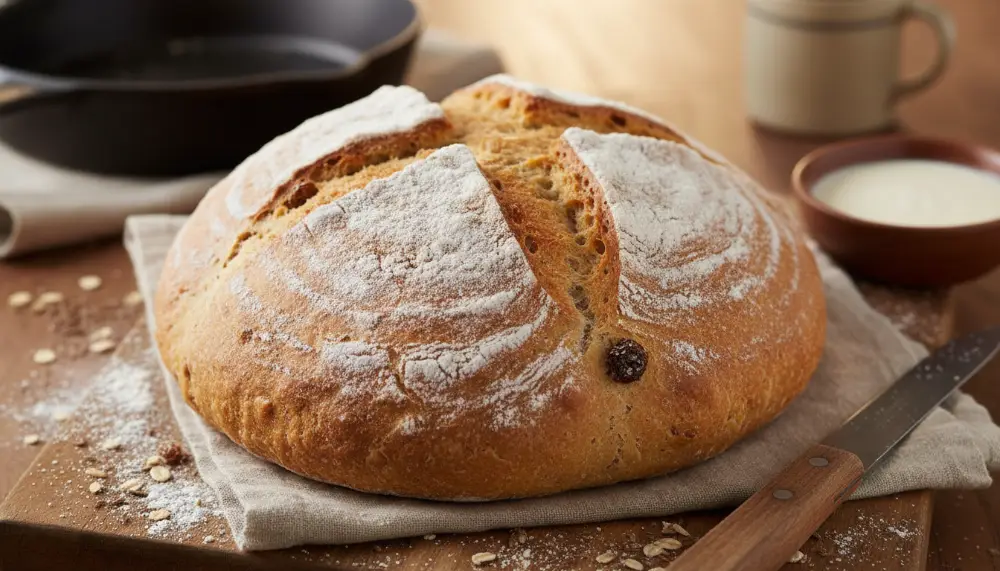

Master the art of the perfect crumb with this authentic, four-ingredient Traditional Irish Soda Bread that brings the heart of Ireland to your kitchen. This is the ultimate quick bread, requiring no yeast, no long proofing times, and absolutely no fuss for the home baker.
Traditional Irish Soda Bread
Ingredients
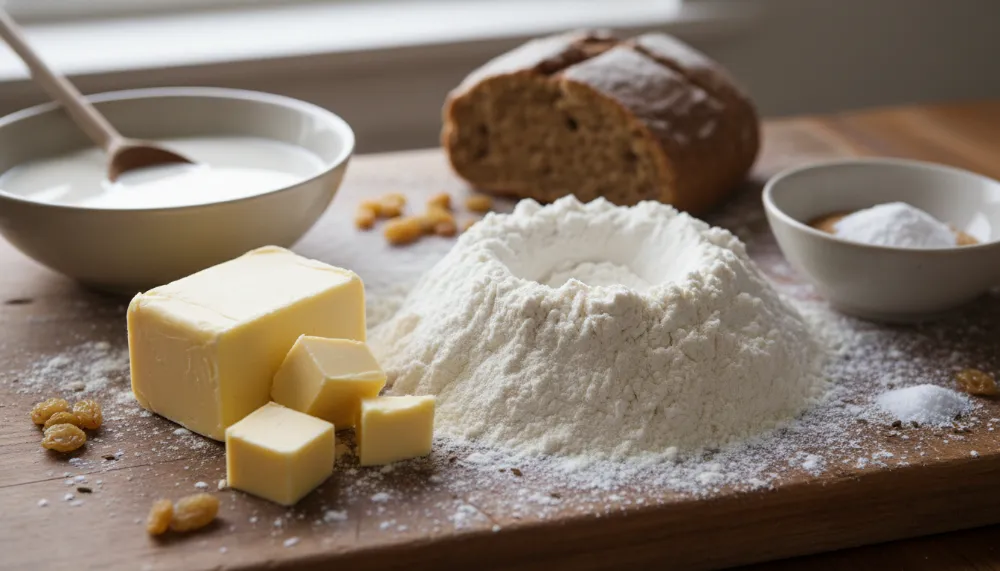
- 1 450g (3.5 cups) All-purpose flour or fine whole wheat flour
- 2 1 teaspoon Baking soda (ensure it is fresh)
- 3 1 teaspoon Salt
- 4 350ml to 400ml Buttermilk (real, full-fat is best)
- 5 1 tablespoon Butter (cold, cubed, optional for texture)
Instructions
- 1 Preheat your oven to 425°F (220°C) and lightly dust a baking tray with flour.
- 2 Sift the flour, baking soda, and salt into a large mixing bowl to ensure no lumps remain.
- 3 If using butter, rub it into the dry ingredients with your fingertips until it resembles fine crumbs.
- 4 Make a well in the center and pour in 350ml of the buttermilk, using a claw-like hand gesture to mix quickly.
- 5 Add more buttermilk if the dough is too dry, it should be soft and slightly sticky but manageable.
- 6 Turn onto a floured surface and gently shape into a round loaf about 1.5 inches thick, do not overwork!
- 7 Transfer to the tray and cut a deep cross into the top with a sharp knife, reaching nearly to the bottom.
- 8 Bake for 30 to 35 minutes until the loaf is golden and sounds hollow when tapped on the base.
The Historical Journey of Traditional Irish Soda Bread
Traditional Irish Soda Bread is much more than a simple side dish, it is a resilient symbol of Irish history and culinary ingenuity. While many people associate the concept of soda bread with ancient times, it actually emerged in the late 1830s. This was a period when the first bicarbonate of soda (baking soda) was introduced to the island. Before this chemical leavening revolution, the Irish diet relied heavily on flatbreads and porridge because the local wheat was known as “soft” wheat. Soft wheat is naturally lower in gluten than the “hard” wheat grown in warmer climates like Italy or North America, meaning it does not have the strength to trap yeast bubbles and rise effectively. This botanical limitation made yeast-based loaves difficult to produce reliably.
When the Great Famine struck between 1845 and 1852, Traditional Irish Soda Bread became a literal lifesaver. It required no expensive commercial yeast and could be baked in a “bastable,” which was a large cast-iron pot with a flat lid that was placed directly into the coals of an open hearth. The introduction of baking soda allowed every household, regardless of wealth or equipment, to produce a hearty, filling loaf. The chemistry was simple yet miraculous: the lactic acid in buttermilk reacted with the baking soda to create carbon dioxide, forcing the dense dough to expand upward and outward. This historical context is vital to understanding why the recipe remains so sparse today, it was born from a need for survival, where every ingredient had to serve a functional purpose.
The Essential Four: Understanding Your Ingredients
The beauty of Traditional Irish Soda Bread lies in its minimalist approach. However, with so few components, the quality of each ingredient becomes paramount. The flour used in professional Irish baking is usually a coarse wholemeal, which provides a nutty texture and a dark, rich crumb. If you are using all-purpose flour, you are creating what is often called “White Soda Bread,” whereas the use of whole wheat flour results in “Brown Soda Bread” or “Wheaten Bread.” To achieve the best texture, professionals often use the Cuisinart 8 Cup Food Processor (https://amzn.to/47Nhbg8), which is essential for fast chopping and slicing during meal prep if you are adding savory mix-ins to your loaf.
Buttermilk is the second critical component. Historically, this was the liquid left over after churning butter, teeming with natural acidity and fat. Today, store-bought buttermilk is usually cultured milk, but it serves the same purpose. The acid is the “ignition” for the baking soda. Without sufficient acidity, the bread will not rise, and it will retain a soapy, metallic aftertaste from the unreacted soda. If you find yourself without buttermilk, you can mimic the effect by adding a tablespoon of lemon juice or white vinegar to regular milk and letting it sit for ten minutes, though the results will never be quite as creamy as the real thing.
The Science of the Rise: Why No Kneading?
One of the most common mistakes beginners make when attempting Traditional Irish Soda Bread is treating it like a yeast bread. In a sourdough or brioche, you want to develop gluten through vigorous kneading to create a stretchy, elastic structure. In soda bread, gluten is the enemy of a tender crumb. The moment the buttermilk hits the flour and soda, the chemical reaction begins. If you overwork the dough, you will toughen the gluten strands, resulting in a bread that is more like a brick than a biscuit. Professional bakers use a “light touch,” often using their hands like a claw to gently bring the wet and dry ingredients together just until they are incorporated. The dough should look shaggy and somewhat irregular, not smooth and polished.
Professional Variations: Elevating the Classic
While the four-ingredient version is the gold standard, modern culinary professionals have developed variations that respect the original spirit while adding layers of complexity. It is important to remember that Traditional Irish Soda Bread should never include pork or alcohol in these professional settings, focusing instead on high-quality beef or vegetable alternatives. For a savory powerhouse, try adding smoked beef brisket and sharp aged cheddar. You can use the Cuisinart 8 Cup Food Processor (https://amzn.to/47Nhbg8) to dice the beef and grate the cheese into uniform pieces before folding them into the flour. This version is particularly delicious when served with a thick beef stew or roasted root vegetables.
If you prefer a sweeter loaf, the “Spotted Dog” variation is the most famous. It involves adding golden raisins and a touch of sugar. To give the raisins a professional depth without using alcohol, soak them in warm apple juice for 30 minutes before adding them to the dough. This provides the moisture and sweetness typically associated with whiskey-soaked fruit but keeps the recipe accessible and compliant with dietary restrictions. Another professional favorite is the “Seedy Brown Bread,” where toasted sunflower seeds, pumpkin seeds, and flaxseeds are incorporated for a crunchy texture and a massive boost in dietary fiber.
Essential Tools for the Perfect Loaf
Baking Traditional Irish Soda Bread does not require a laboratory of equipment, but a few key tools can make the difference between a good loaf and a great one. Beyond the standard mixing bowl, a heavy-duty baking sheet or a preheated Dutch oven is ideal. The Dutch oven mimics the traditional bastable, trapping steam and heat to ensure a consistent rise. For those who enjoy serving their bread with modern accompaniments, the Ninja BN751 Professional Plus DUO Blender (https://amzn.to/3LCDyNR) is perfect for creating smooth tahini sauces or harissa pastes with its 1000W motor, which pair surprisingly well with the rustic texture of soda bread.
Additionally, if you are making a full meal around your bread, the Cosori 9-in-1 TurboBlaze Air Fryer 6 Qt (https://amzn.to/4hRWmVq) is a fantastic companion. It roasts chickpeas and vegetables perfectly with a large family capacity, providing a healthy, fiber-rich side dish that complements the density of the bread. Using these tools allows you to manage the timing of a multi-course meal so that the bread comes out of the oven exactly when the roasted components are ready.
The Meaning Behind the Cross
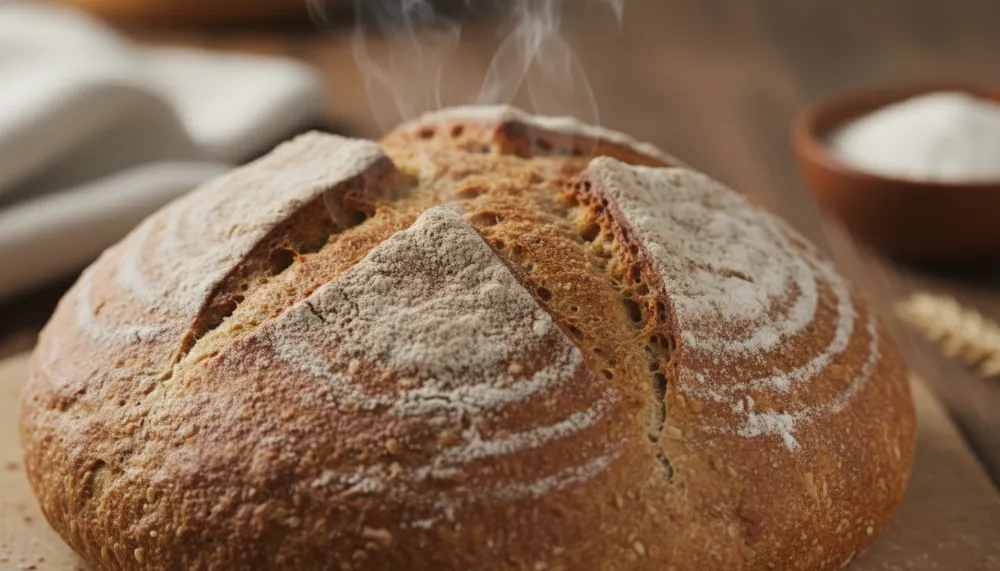
Perhaps the most iconic feature of Traditional Irish Soda Bread is the deep cross cut into the top of the loaf before it enters the oven. While folklore suggests this was done to “let the fairies out” or ward off evil, the practical reasons are purely scientific. The cross allows the heat to penetrate the thickest part of the dough quickly, ensuring the center is fully cooked by the time the crust is golden. It also provides a “controlled break” for the dough to expand. Without the score, the bread would likely crack in unpredictable ways along the sides, leading to an uneven shape and potential raw spots in the middle. In some parts of Ireland, each quadrant of the bread is further poked with the knife to represent the four provinces, but the primary goal remains even heat distribution.
Nutritional Profile: A Hearty Staple
Traditional Irish Soda Bread is a dense, energy-providing food that served as a primary source of carbohydrates for generations. In a typical 100g serving of brown soda bread, you can expect approximately 220 calories, 8 grams of protein, and up to 5 grams of dietary fiber. It is naturally lower in fat than many modern breads because it does not require oils or large amounts of butter for its structure. Furthermore, because it uses wholemeal flour and buttermilk, it is rich in B-vitamins like Thiamin and Niacin, as well as essential minerals like Iron and Calcium. For those watching their sodium intake, it is important to remember that the salt and baking soda contribute significantly to the total sodium content, so balance is key when planning your daily meals.
Troubleshooting Your Soda Bread
Even with its simplicity, Traditional Irish Soda Bread can occasionally present challenges. If your loaf is too dense, it is likely that you either overworked the dough or your baking soda has lost its potency. Always test your soda by dropping a pinch into a spoonful of vinegar, if it doesn’t fizz aggressively, it is time for a new box. If the bread is cooked on the outside but raw in the middle, your oven may be too hot. Reducing the temperature slightly and covering the loaf with foil halfway through the bake can help the center catch up. Finally, if the bread has a greenish tint or a soapy taste, you have used too much baking soda. Precision in measuring these small quantities is the hallmark of a professional baker.
Storage and Serving Suggestions
Because Traditional Irish Soda Bread does not contain preservatives or the natural preservatives found in sourdough, it is best eaten within 24 to 48 hours of baking. To keep it fresh, wrap it in a clean tea towel rather than plastic wrap, this allows the bread to breathe while preventing it from drying out. For serving, nothing beats a thick slice slathered in salted butter and a drizzle of local honey. It is also the perfect vehicle for mopping up juices from a roast chicken or a beef-based stew. If the bread does go stale, do not throw it away, it makes the world’s best toast, especially when topped with poached eggs and sautéed mushrooms for a hearty breakfast.