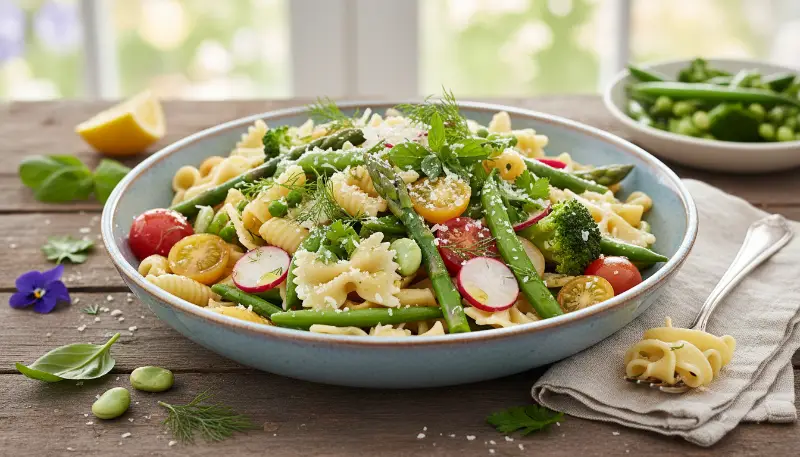

Experience the vibrant flavors of the season with our signature Spring Vegetable Pasta, a dish that perfectly balances the crispness of garden-fresh greens with the rich, smoky depth of savory beef. This recipe is designed to celebrate the bounty of spring while adhering to specific dietary preferences by utilizing high-quality beef alternatives and alcohol-free deglazing techniques.
Spring Vegetable Pasta with Beef Bacon
15 MIN
20 MIN
4 PERS
Ingredients
- 1 1 lb Gemelli or Rigatoni pasta
- 2 6 oz Beef bacon, diced
- 3 1 bunch Asparagus, trimmed and bias-cut
- 4 1 cup Fresh English peas
- 5 2 Leeks, sliced (white parts only)
- 6 1/2 cup Beef broth
- 7 1 tbsp Fresh lemon juice
- 8 1/2 cup Heavy cream
- 9 1/2 cup Shaved Parmesan
- 10 Fresh basil and mint for garnish
Instructions
- 1 Cook the pasta in a large pot of salted water until al dente then reserve one cup of pasta water and drain
- 2 In a large skillet cook the diced beef bacon over medium heat until crispy and the fat has rendered fully
- 3 Remove beef bacon with a slotted spoon and add sliced leeks to the skillet sautéing until soft and translucent
- 4 Add asparagus and peas to the pan cooking for three minutes until they turn a bright vibrant green
- 5 Pour in the beef broth and lemon juice to deglaze the pan scraping up the savory bits from the bottom
- 6 Stir in the heavy cream and let the sauce simmer for two minutes before tossing in the cooked pasta and beef bacon
- 7 Garnish with parmesan and fresh herbs then serve immediately while hot and fragrant
The Art of the Perfect Spring Vegetable Pasta
When the first sprouts of the season begin to emerge, there is no better way to celebrate than with a bowl of **Spring Vegetable Pasta**. This dish is more than just a meal, it is a tribute to the renewal of the earth, bringing together the sweetness of young peas, the snap of fresh asparagus, and the earthy richness of beef. Achieving the perfect balance in a **Spring Vegetable Pasta** requires an understanding of how to treat delicate produce while building a robust flavor profile that does not rely on traditional pork products or alcohol.
In many classical interpretations, pancetta or guanciale provides the salty foundation. However, by using high-quality beef bacon, we can replicate that essential umami punch while respecting dietary boundaries. The key is in the rendering process. Using a Cuisinart 8 Cup Food Processor to finely dice your aromatics can speed up the prep, but for the beef bacon, a sharp knife and a bit of patience in the pan are your best friends. As the beef fat melts, it becomes the flavorful medium in which our leeks and asparagus will eventually bathe.
Choosing Your Seasonal Bounty
The soul of a great **Spring Vegetable Pasta** lies in the quality of the vegetables. Spring is a fleeting season, and the window for truly tender English peas and pencil-thin asparagus is small. When selecting your produce, look for asparagus stalks that are firm and have tightly closed tips. If you find thicker stalks, you may want to use a vegetable peeler to remove the woody outer layer, ensuring every bite of your **Spring Vegetable Pasta** is melt-in-your-mouth tender.
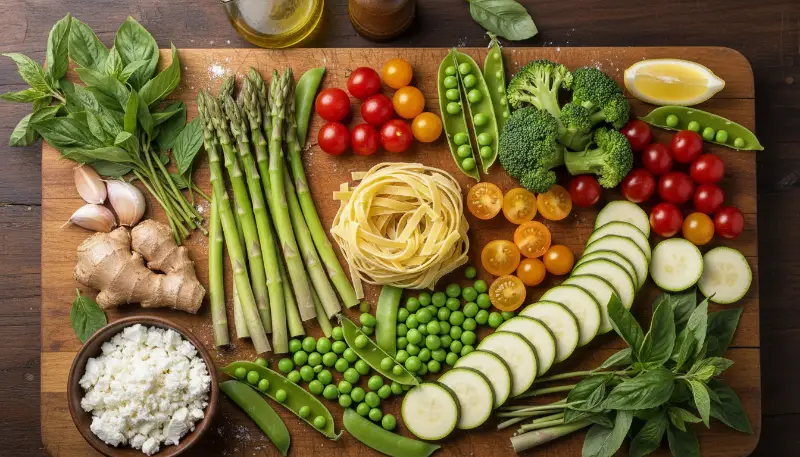
Fava beans, also known as broad beans, are another spectacular addition. While they require a bit more labor, shell them, blanch them, and remove the outer skin, the reward is a buttery texture that elevates the **Spring Vegetable Pasta** to gourmet heights. If you are looking to streamline your process, using the Cosori 9-in-1 TurboBlaze Air Fryer 6 Qt to lightly roast your vegetables before tossing them with the pasta can add a unique charred depth that traditional sautéing sometimes lacks.
Mastering the Alcohol-Free Deglazing Technique
A common hurdle for many home cooks is finding a suitable replacement for white wine in a **Spring Vegetable Pasta**. Wine is typically used to provide acidity and to loosen the “fond”, the caramelized bits of beef and vegetable stuck to the pan. To achieve this without alcohol, we utilize a combination of high-quality beef broth and fresh lemon juice. The broth provides the savory body, while the lemon juice offers the bright, citrusy lift that mimics the profile of a dry Sauvignon Blanc or Pinot Grigio.
When you pour your broth into the hot skillet, the steam will release those trapped flavors, creating a pan sauce that is remarkably complex. For those who want an even smoother consistency, a quick pulse in the Ninja BN751 Professional Plus DUO Blender with a few of the sautéed leeks can create a creamy, emulsified base that coats every strand of your **Spring Vegetable Pasta** without needing excessive amounts of heavy cream.
Pasta Shapes and Textures
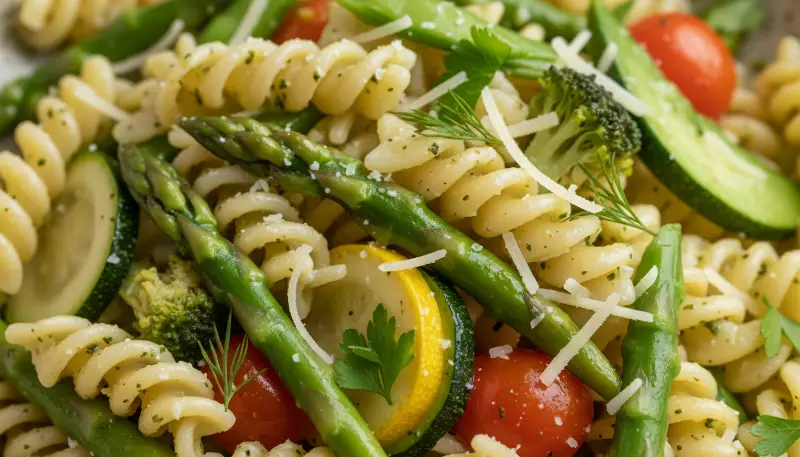
The shape of the noodle in your **Spring Vegetable Pasta** is not a choice to be made lightly. You want a shape that can “catch” the peas and the small bits of beef bacon. Gemelli, with its double-twisted strands, is an excellent candidate. Orecchiette, or “little ears,” are also perfect as they act as tiny bowls for the sauce and vegetables. If you prefer a longer noodle, a thick Linguine or Bucatini can work, provided the vegetables are sliced thinly enough to wrap around the pasta.
Always remember to finish your pasta *in* the sauce. This is the secret of professional chefs. By taking the pasta out of the water a minute before it is fully done and finishing it in the skillet with the beef broth and cream, the pasta absorbs the flavors of the **Spring Vegetable Pasta** rather than just sitting on top of them. This is also when you add your reserved pasta water, the starch in the water acts as a glue, binding the sauce to the noodle for a silky, restaurant-quality finish.
Long-Term Storage and Meal Prep Success
If you find yourself with leftovers, or if you want to prep your **Spring Vegetable Pasta** ahead of time, storage is critical. To keep the vegetables from becoming mushy, it is often best to undercook them slightly if you know they will be reheated. We recommend using the Rubbermaid Brilliance Glass Storage Set of 9 for your fridge storage. These leak-proof containers keep the air out, ensuring that the vibrant green of your peas and asparagus doesn’t turn a dull grey overnight.
For those who like to buy their spring produce in bulk, the FoodSaver Vacuum Sealer Machine is a game-changer. You can blanch your spring vegetables, vacuum seal them, and freeze them to enjoy a **Spring Vegetable Pasta** even when the season has long since passed. This prevents freezer burn and locks in the nutritional value of the vegetables at their peak ripeness.
Flavor Profiles and Herbaceous Infusions
What truly sets a world-class **Spring Vegetable Pasta** apart is the use of fresh herbs. While dried herbs have their place, spring cooking demands the volatile oils of fresh basil, mint, and parsley. Mint might seem like an unusual choice for pasta, but it is a classic pairing with peas and beef, providing a cooling finish that contrasts beautifully with the warm, savory notes of the beef bacon.
Add your herbs at the very last second. Heat is the enemy of fresh herb color and aroma. By folding them into the **Spring Vegetable Pasta** just before serving, you ensure that the first thing your guests smell is a bouquet of garden freshness. A final grate of lemon zest over the top will provide one last punch of fragrance that ties the whole dish together. For more inspiration on seasonal eating, check out our full recipe index at [https://www.revealedrecipe.com/post-sitemap.xml].
Can I use frozen peas for Spring Vegetable Pasta?
Yes, you absolutely can use frozen peas if fresh ones are not available. In fact, frozen peas are often flash-frozen at the peak of ripeness, making them a better choice than “fresh” peas that have been sitting on a grocery shelf for a week. Simply add them to the **Spring Vegetable Pasta** toward the end of the cooking process as they only need a minute or two to warm through.
What is the best beef substitute for pancetta?
Beef bacon is the most common and accessible substitute for pancetta in a **Spring Vegetable Pasta**. It offers a similar fat-to-meat ratio and provides the smokiness needed. If you want something even more refined, you can use Bresaola, which is an air-dried beef. Since Bresaola is very lean, you may need to add a touch more olive oil to the pan when sautéing your vegetables.
How do I prevent my cream sauce from curdling?
To prevent curdling in your **Spring Vegetable Pasta**, ensure that you are using heavy cream rather than milk or half-and-half, as the higher fat content is more stable under heat. Additionally, wait to add the lemon juice until after the cream has been incorporated and warmed, or add the lemon juice to the broth first and let it reduce before stirring in the cream. Avoid boiling the sauce vigorously once the dairy is added.
Is there a way to make this Spring Vegetable Pasta lighter?
You can easily lighten up this **Spring Vegetable Pasta** by omitting the heavy cream and instead using a bit more reserved pasta water and a drizzle of high-quality extra virgin olive oil. This creates a “glossy” sauce rather than a creamy one, highlighting the natural sweetness of the spring vegetables even more prominently.
By following these steps and focusing on the quality of your ingredients, you will create a **Spring Vegetable Pasta** that is destined to become a seasonal favorite in your household. Whether you are cooking for a weeknight family dinner or a weekend gathering, this dish brings the joy of spring directly to your table.