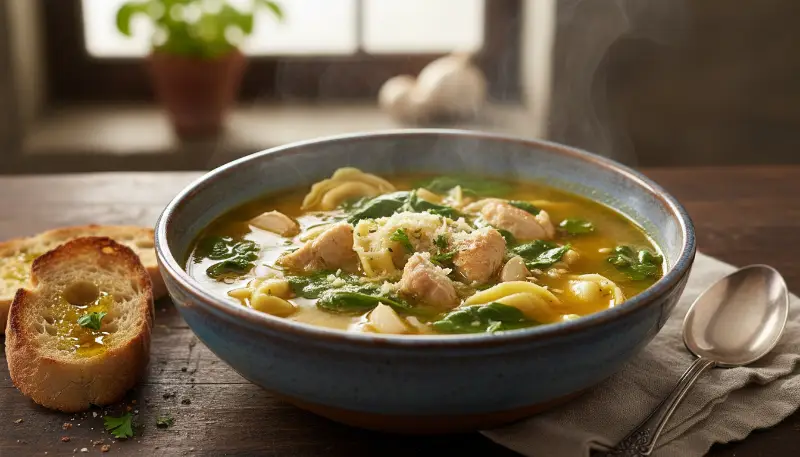

Italian Penicillin Soup, affectionately known by generations as Pastina in Brodo, is the ultimate restorative meal designed to soothe the soul and nourish the body during cold winter months. This traditional dish relies on a rich, golden broth and tiny pasta to create a culinary embrace that feels like home in every spoonful.
Italian Penicillin Soup (Pastina in Brodo)
15 MIN
180 MIN
6 PERS
Ingredients
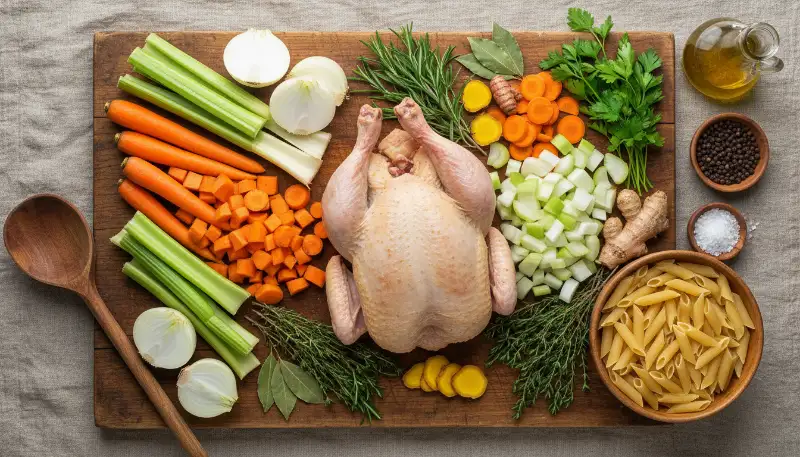
- 1 1 lb Beef Shank or Beef Marrow Bones
- 2 1 whole Chicken (approx. 3 lbs)
- 3 3 large Carrots peeled and chopped
- 4 3 stalks Celery chopped
- 5 1 large Yellow Onion quartered
- 6 6 cloves Garlic smashed
- 7 12 cups Cold Water
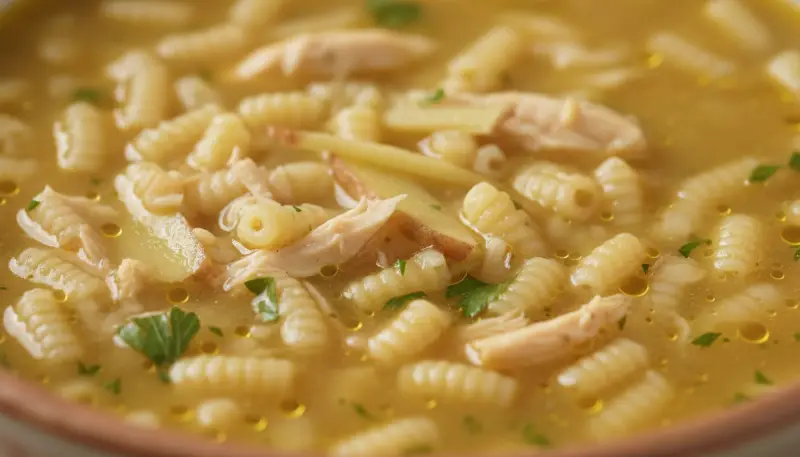
- 8 1 ½ cups Pastina (Stelline or Orzo)
- 9 1 tsp Lemon Juice
- 10 Freshly Grated Parmesan and Parsley
Instructions
- 1 Combine beef bones, chicken, and vegetables in a stockpot with cold water.
- 2 Simmer on low for 3 hours, skimming any foam that rises to the surface.
- 3 Strain the broth, reserving the meat and discarding the bones.
- 4 Blend the cooked carrots and celery with some broth and stir back in.
- 5 Bring broth to a boil, add pastina, and cook until tender.
- 6 Add lemon juice and shredded meat, then serve with cheese and parsley.
The Legacy of Italian Penicillin Soup
To understand the cultural weight of Italian Penicillin Soup, one must look at the history of Italian home cooking. Traditionally known as Pastina in Brodo or Minestrina, this dish is far more than just a culinary creation, it is a medicinal ritual. Every Italian family has their version, handed down through verbal instructions and intuitive measuring. While the world may turn to laboratory-made remedies, the Italian nonna turns to her stockpot. This soup is designed to be easily digestible, highly hydrating, and packed with the collagen-rich minerals found in slow-simmered bones. When we talk about Italian Penicillin Soup, we are talking about a legacy of care that transcends simple nutrition.
In many households, this soup is the first solid food a child eats after weaning. It is also the last meal served to the elderly when their appetite wanes. The “penicillin” moniker arises from the belief that the broth can cure anything from a broken heart to a common head cold. Because this recipe omits pork and alcohol, it focuses on the pure essence of beef and chicken, creating a cleaner flavor profile that is accessible to a wider range of dietary needs without sacrificing the depth of flavor that defines a true Italian Penicillin Soup.
Choosing the Best Ingredients for Your Italian Penicillin Soup
The secret to a world-class Italian Penicillin Soup lies in the quality of the raw materials. Since the broth is the star of the show, you cannot cut corners here. For the most restorative version, we utilize beef marrow bones and beef shank. These parts of the cow are rich in marrow and connective tissue, which, when simmered for hours, release gelatin that gives the soup a silky, mouth-coating texture. This is a crucial substitution for traditional pork rinds, providing a savory umami depth that is second to none.
When selecting your chicken, aim for a whole bird or bone-in thighs. The skin and cartilage contribute to the golden color and “fatty” richness that defines Italian Penicillin Soup. For the vegetables, use the freshest organic carrots and celery you can find. Using a Cuisinart 8 Cup Food Processor can help you prep these aromatics quickly, ensuring consistent sizes for even cooking if you choose to leave them whole or puree them later. Remember, we avoid using wine to deglaze, instead, we rely on the natural sweetness of the carrots and a final splash of lemon juice to provide that essential acidic balance.
The Essential Kitchen Tools for Success
While you can certainly make Italian Penicillin Soup with basic gear, certain tools elevate the process. A high-quality blender is non-negotiable if you prefer the “thick” version of the broth where the cooked vegetables are blended back into the liquid. The Ninja BN751 Professional Plus DUO Blender is a fantastic choice here, its 1000W motor can emulsify the softened carrots and celery into a velvety liquid in seconds, giving your Italian Penicillin Soup a beautiful opaque look and extra fiber.
For those who love to meal prep, the Rubbermaid Brilliance Glass Storage Set of 9 is essential. These containers are leak-proof and stackable, making it easy to store large batches of broth in the fridge or freezer. If you are making a massive batch of Italian Penicillin Soup to last through the winter, consider using a FoodSaver Vacuum Sealer Machine to package portions of the shredded beef and concentrated broth. This prevents freezer burn and ensures that your “penicillin” is ready to go whenever someone in the house feels a sniffle coming on.
The Science of a Healing Broth
Why do we call it Italian Penicillin Soup? Science actually backs up much of the folklore. Slow-cooking beef shank and chicken bones breaks down collagen into gelatin. This gelatin is incredibly soothing for the digestive tract and is known to support joint health and immune function. The amino acids released, such as cysteine, are chemically similar to medications used to treat respiratory infections, helping to thin mucus in the lungs. By using beef instead of pork, you maintain a high mineral content including zinc and iron, which are vital for a healthy immune response.
Furthermore, the hydration factor of Italian Penicillin Soup cannot be overstated. When we are sick, we lose fluids. This soup provides electrolytes and warm liquid that maintains hydration levels far more effectively than plain water. The tiny pasta shapes, known as pastina, provide quick-digesting carbohydrates that offer a gentle energy boost without taxing the digestive system. This is why Italian Penicillin Soup has remained a staple for centuries, it is functionally perfect for a recovering body.
Step-by-Step Mastery of the Simmer
The first rule of making Italian Penicillin Soup is patience. You cannot rush a good broth. Start by placing your beef bones and whole chicken into the coldest water possible. As the water temperature rises slowly, it allows the proteins and impurities to coagulate and rise to the top. Use a fine mesh spoon to skim this foam away, this ensures your Italian Penicillin Soup remains clear and vibrant rather than cloudy and grey.
Once the initial boil is reached, turn the heat down to the lowest possible simmer. You want to see only one or two bubbles breaking the surface every few seconds. This gentle extraction prevents the fat from emulsifying into the liquid, which would make the broth greasy. Instead, you want a clean, golden fat layer that you can partially skim off later or stir in for richness. After three hours, the beef shank should be falling off the bone. This meat is incredibly tender and should be shredded to be added back into the final Italian Penicillin Soup during the assembly phase.
Variations and Dietary Adaptations
While our core recipe for Italian Penicillin Soup focuses on beef and chicken, there are many ways to customize the dish. Some families like to whisk an egg with a bit of Parmesan cheese and drizzle it into the boiling broth right at the end, creating “Stracciatella” style ribbons. Others prefer to add a handful of fresh spinach at the very last second for a pop of color and Vitamin K. Regardless of the add-ins, the foundation of the Italian Penicillin Soup must remain the same, high-quality meat and a long, slow simmer.
If you want to add a bit of texture to your meal, you can use the Cosori 9-in-1 TurboBlaze Air Fryer 6 Qt to make homemade croutons from leftover crusty bread. Just toss cubes of bread with olive oil and dried oregano, then air fry for 5 minutes until crispy. Dropping these into a bowl of Italian Penicillin Soup adds a satisfying crunch that contrasts beautifully with the soft pastina pasta. This is an excellent way to turn a light soup into a more substantial lunch.
Storage and Freezing Tips
Because Italian Penicillin Soup is such a labor of love, it is wise to make a large batch. However, there is one critical rule for storage: do not store the pasta in the broth. Pastina is highly absorbent. If you leave the pasta in the soup overnight, it will swell to three times its size and soak up all your delicious golden liquid, leaving you with a thick porridge rather than a soup. To avoid this, cook the pastina separately or only in the amount of broth you plan to eat immediately.
Store the concentrated broth in the fridge for up to 5 days, or freeze it for up to 6 months. When you are ready to serve, simply bring the broth back to a boil and drop in your fresh pastina. This ensures that every time you enjoy your Italian Penicillin Soup, the pasta has the perfect “al dente” texture and the broth is plentiful. Using the FoodSaver Vacuum Sealer Machine to bag the broth in flat portions is a pro-level tip for saving freezer space.
The Art of the Finish
The final moments before serving your Italian Penicillin Soup are the most important for flavor. This is when you add the “bright” notes. Since we are not using white wine, the teaspoon of fresh lemon juice is vital. It cuts through the richness of the beef marrow and chicken fat, lifting the entire dish. A heavy hand with the freshly grated Parmesan cheese provides the saltiness and a creamy element that ties everything together. Many people find that a crack of fresh black pepper right at the end completes the Italian Penicillin Soup experience.
For more inspiration on building the perfect pantry for these types of meals, check out our guide on traditional soup recipes or explore our archive of healthy meal ideas. You can also find more of Nonna’s kitchen secrets throughout our blog, where we focus on authentic techniques that prioritize flavor and well-being.
Frequently Asked Questions
Can I make Italian Penicillin Soup in a slow cooker?
Yes, you can! Simply add all the broth ingredients to your slow cooker and cook on low for 8-10 hours. The extraction will be very thorough, though you may find the broth slightly cloudier than if you simmered it on the stove and skimmed the foam manually. It is a great “set it and forget it” way to get your Italian Penicillin Soup fix.
What is the best type of pasta for Italian Penicillin Soup?
The traditional choice is “Stelline” (tiny stars), but any very small pasta works. Acini di Pepe, Orzo, or even broken vermicelli noodles are acceptable. The goal is a pasta that is small enough to be eaten with a spoon without needing to be bitten, which is why it is so popular for those feeling under the weather.
Why do we use beef shank instead of just chicken?
Beef shank adds a deeper level of iron and a more robust savory flavor than chicken alone. While a pure chicken broth is wonderful, the addition of beef marrow and meat makes the Italian Penicillin Soup feel more like a full meal and provides a broader spectrum of nutrients that aid in recovery and health.
Can I make this soup vegetarian?
While you can certainly make a vegetable pastina soup, it wouldn’t traditionally be called Italian Penicillin Soup in the medicinal sense, as the collagen from the bones is the key “active ingredient.” However, a rich mushroom and seaweed broth can provide a similar umami depth if you are avoiding meat entirely.
Is it okay to use store-bought broth?
In a pinch, yes, but the result will not be the same. Most store-bought broths lack the gelatinous quality of a homemade version. If you must use store-bought, try to find a high-quality “bone broth” and simmer it for 20 minutes with some fresh carrots and celery before adding your pasta to boost the flavor of your Italian Penicillin Soup.