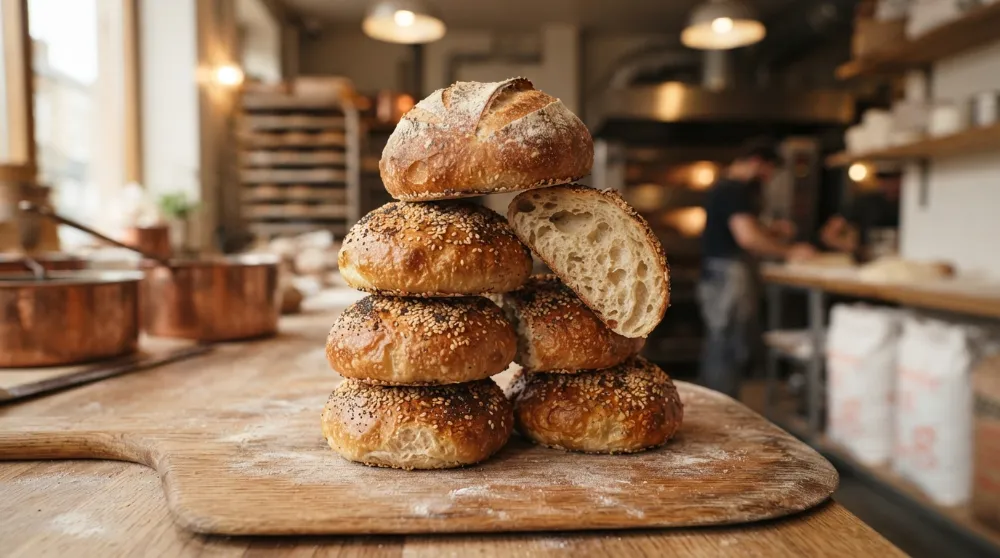

Transform your kitchen scraps into artisanal gold with these soft, pillowy Sourdough Discard Hamburger Buns that offer a perfect balance of tangy depth and buttery texture. This recipe is the ultimate solution for utilizing your leftover starter to create bakery-quality bread that elevates any backyard cookout or family dinner.
Soft Sourdough Discard Hamburger Buns
20 mins
20 mins
3 hours
8 buns
American
Ingredients
- 1 150g Sourdough Discard (unfed)
- 2 500g Bread Flour (high protein)
- 3 240ml Warm Whole Milk (105°F)
- 4 60g Unsalted Butter (softened)
- 5 30g Granulated Sugar
- 6 10g Fine Sea Salt
- 7 7g Instant Yeast
- 8 1 Large Egg (for wash)
Instructions
- 1 Combine warm milk, yeast, and sugar in a mixer bowl. Let stand for 5 minutes until foamy.
- 2 Add sourdough discard, bread flour, and salt. Mix with a dough hook on low until a shaggy dough forms.
- 3 Gradually incorporate softened butter, one tablespoon at a time, kneading for 8 to 10 minutes until smooth and elastic.
- 4 Place dough in a greased bowl, cover, and rise in a warm spot for 1.5 to 2 hours until doubled in size.
- 5 Divide dough into 8 equal pieces (approx 115g each). Shape into tight rounds and place on a parchment-lined sheet.
- 6 Cover and proof for 45 to 60 minutes. Preheat oven to 375°F (190°C).
- 7 Brush with egg wash and bake for 18 to 22 minutes until deep golden brown. Cool on a wire rack.
⚡ Nutrition Facts (Per Serving)
280 kcal
48 g
9 g
7 g
2 g
450 mg
The Historical Journey of Sourdough Discard Hamburger Buns
The story of Sourdough Discard Hamburger Buns is a fascinating intersection of ancient fermentation techniques and 20th-century American fast-food innovation. While sourdough itself dates back to ancient Egypt, the specific vehicle we call the “hamburger bun” is a relatively modern invention. Historically, bread was leavened exclusively with wild yeast, a process that required patience and a symbiotic culture of bacteria and yeast. However, when commercial yeast took over in the late 1800s, the “discard” from traditional starters became a byproduct that many frugal bakers were loath to waste.
In 1916, Walter Anderson, the co-founder of White Castle, revolutionized the burger industry by creating a specific bun designed to hold a savory patty. Before this, hamburgers were often served on standard sliced bread, which quickly became soggy and fell apart. The modern movement of integrating sourdough discard into these buns has allowed home bakers to reclaim the complexity of ancient flavors while maintaining the soft, sturdy structure required for a premium burger experience. Today, Sourdough Discard Hamburger Buns represent a shift toward sustainable, no-waste baking, turning what was once a surplus into a culinary asset.
Why Use Sourdough Discard in Your Buns?
The inclusion of sourdough discard in hamburger buns isn’t just about reducing waste, it is about enhancing the science of the dough. The discard, which is the portion of the starter removed before a fresh feeding, contains lactic acid bacteria that provide a subtle, sophisticated tang that commercial breads simply cannot replicate. More importantly, the acidic environment created by the discard helps to break down gluten proteins just enough to create a tender, “short” crumb, preventing the bun from becoming overly chewy or tough.
Nutritionally, Sourdough Discard Hamburger Buns offer significant advantages over standard white rolls. The fermentation process initiated by the wild yeast culture helps degrade phytic acid, an antinutrient found in grain that can block the absorption of minerals like magnesium, zinc, and iron. By neutralizing phytic acid, the nutrients in the flour become more bioavailable to the body. Furthermore, the slow fermentation process often makes the bread easier to digest for those with mild gluten sensitivities, as the bacteria partially pre-digest the flour’s starches and proteins.
The Secret to Soft, Pillowy Results: Enriched Dough
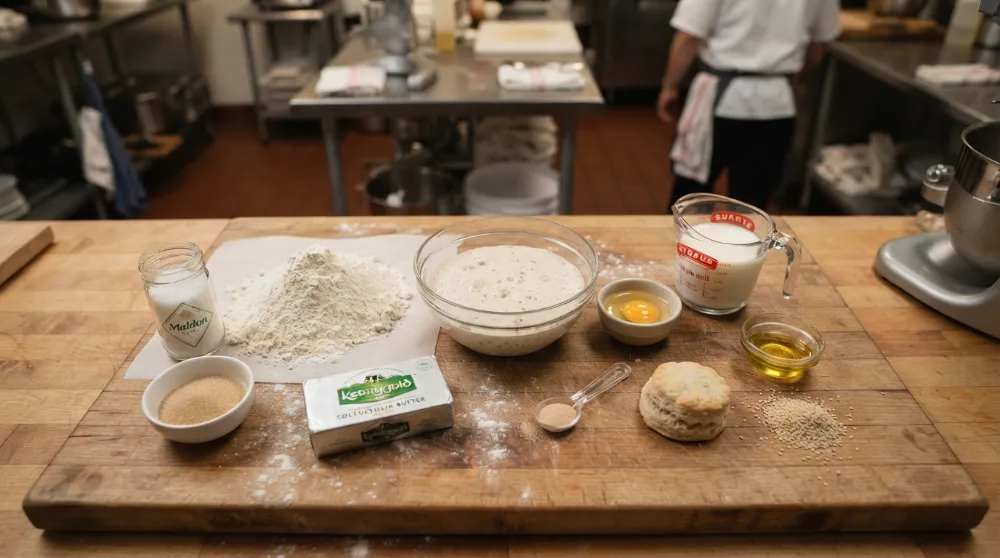
To achieve that signature soft texture found in high-end bistro buns, we use a process called enrichment. This means adding fats and sugars to the dough to interfere with the gluten structure. In our Sourdough Discard Hamburger Buns recipe, we utilize whole milk and unsalted butter. These ingredients coat the gluten strands, preventing them from forming long, rubbery chains. The result is a bun that yields easily when bitten into but still possesses enough structural integrity to hold a juicy beef patty and various toppings without dissolving.
For those looking to optimize their baking environment, tools like the Cosori 9-in-1 TurboBlaze Air Fryer 6 Qt can be a game-changer. While primarily an air fryer, its precise proofing function provides the perfect, consistent warmth needed to help sourdough discard dough rise efficiently, especially in colder kitchens. Similarly, using the Instant Pot Duo 7-in-1 on the yogurt setting can create a controlled environment for bulk fermentation, ensuring your buns reach their maximum volume before hitting the oven.
Essential Tools for Success
Baking Sourdough Discard Hamburger Buns is an artisanal craft that benefits from the right equipment. A high-quality digital scale is non-negotiable, as measuring discard and flour by weight ensures the hydration level remains consistent. For kneading, a stand mixer is highly recommended because enriched sourdough dough can be quite sticky initially. If you are prepping toppings to go with your fresh buns, a Hamilton Beach Electric Vegetable Chopper can drastically reduce your prep time for onions, pickles, and lettuce.
Professional Variations and Flavor Customization
One of the joys of making Sourdough Discard Hamburger Buns at home is the ability to customize the flavor profile to match your specific meal. While a plain sesame-topped bun is a classic, you can easily pivot to more adventurous variations:
- Herb & Roasted Garlic: Incorporate two tablespoons of roasted garlic paste and a teaspoon of dried rosemary directly into the dough during the final kneading phase.
- Smoky Paprika & Onion: Add a teaspoon of smoked paprika to the flour and top the buns with dehydrated onion flakes for a savory, barbecue-ready aroma.
- Honey-Wheat Variation: Replace half of the bread flour with whole wheat flour and swap the granulated sugar for local honey. This creates a denser, more rustic bun that pairs beautifully with grilled chicken or plant-based burgers.
When preparing accompanying sauces or spreads, such as a signature burger sauce or a fresh herb pesto, using a NutriBullet 600W Personal Blender or a Ninja NutriPlus Personal Blender ensures a smooth, professional consistency every time.
Expert Troubleshooting: Common Pitfalls
Even for experienced bakers, working with sourdough discard can present unique challenges. Here are the most common issues and how to solve them:
Why are my buns flat?
Flat buns usually result from either over-proofing or using a flour with insufficient protein. If the dough proofs for too long, the yeast exhausts its food supply and the gluten structure collapses under its own weight. Always use the “poke test”: gently press a finger into the dough. If it springs back slowly and halfway, it is ready for the oven. If it leaves a permanent indent, it is over-proofed. Ensure you are using bread flour, as all-purpose flour often lacks the strength to support the weight of the fats in Sourdough Discard Hamburger Buns.
My buns are too dense!
Density often stems from adding too much flour during the kneading process. Sourdough discard dough is naturally sticky. Resist the urge to keep dusting your work surface. Instead, use a dough scraper and trust the kneading process to develop the gluten, which will naturally make the dough less sticky over time. If you find your oven isn’t heating evenly, leading to dense centers, consider using the Instant Vortex 6-Quart XL Air Fryer or the Ninja Crispi 4-in-1 Glass Air Fryer for smaller batches, as their convection heat ensures a perfect, even rise and crust.
Storage and Make-Ahead Instructions
Homemade Sourdough Discard Hamburger Buns lack the preservatives found in commercial bread, meaning they are best enjoyed within 24 to 48 hours of baking. To keep them fresh, store them in an airtight container at room temperature once they have cooled completely. If you have leftovers, avoid the refrigerator, as it can accelerate staling. Instead, these buns freeze remarkably well. Wrap them individually in plastic wrap and store in a freezer bag for up to three months. To revive them, simply thaw at room temperature and toast briefly in the oven or air fryer.
For a complete meal experience, consider slow-cooking your burger toppings or a pulled beef filling in a Crock-Pot 7-Qt Oval Slow Cooker. The long, slow heat perfectly complements the artisanal quality of your freshly baked Sourdough Discard Hamburger Buns. And of course, no baking session is complete without a fresh cup of coffee, which you can easily brew with a Keurig K-Express Coffee Maker while your dough is in its final rise.
Final Thoughts on Sourdough Discard Baking
Mastering the Sourdough Discard Hamburger Bun is a gateway to a more sustainable and flavorful kitchen. It encourages a deeper connection with the ingredients and the biological processes that make bread so nourishing. Whether you are hosting a summer barbecue with high-quality beef patties or simply making a weeknight chicken sandwich, these buns provide a foundation of quality that store-bought options simply cannot match. By utilizing your discard, you are participating in a tradition that spans millennia, updated for the modern, efficiency-focused kitchen.