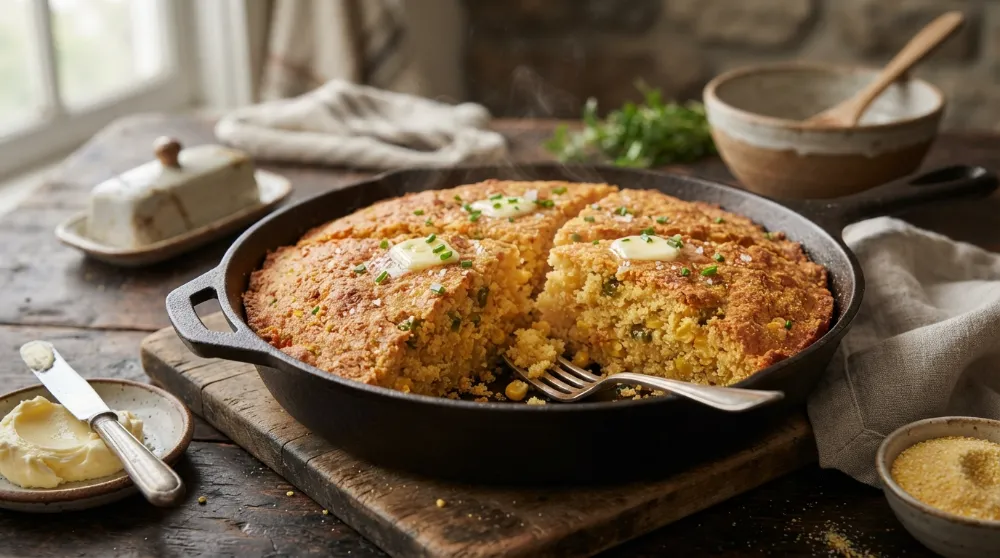

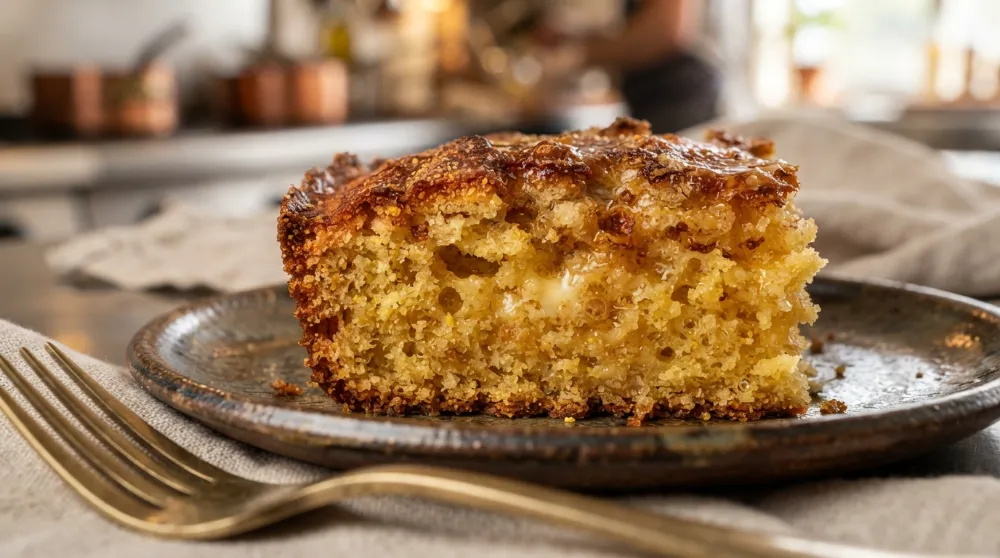
Stop throwing away your precious starter and transform it into the most flavorful, moist Sourdough Discard Cornbread you have ever tasted. This recipe marries the ancient tang of wild yeast with the rustic comfort of golden stone-ground cornmeal for a side dish that outshines the main course.
Golden Sourdough Discard Cornbread
10 Mins
25 Mins
35 Mins
12 Slices
American
Ingredients
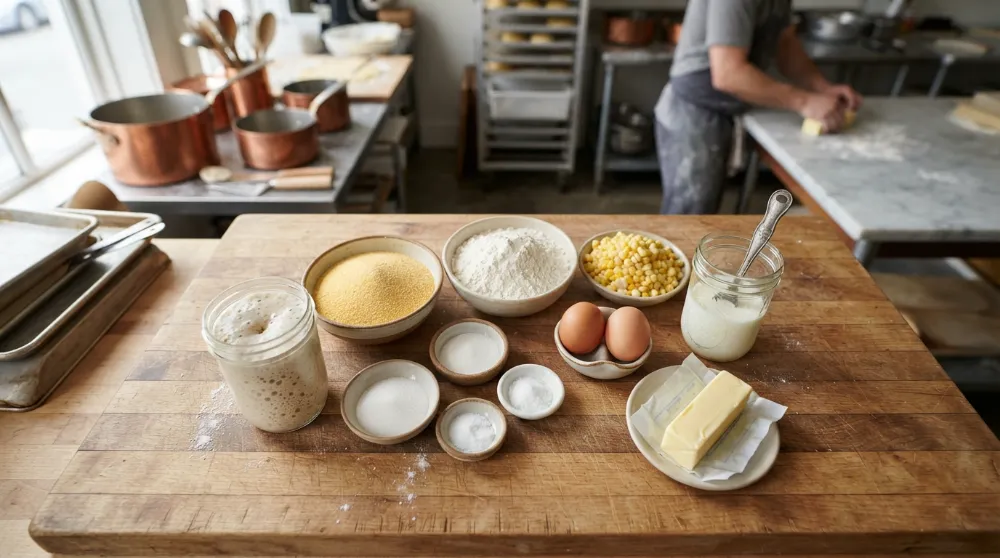
- 1 cup Sourdough Discard (unfed)
- 1.5 cups Stone-ground Yellow Cornmeal
- 1 cup All-Purpose Flour
- 0.33 cup Honey or Maple Syrup
- 1 tbsp Baking Powder
- 0.5 tsp Baking Soda
- 1 tsp Fine Sea Salt
- 0.5 cup Unsalted Butter (melted and cooled)
- 2 Large Eggs (room temperature)
- 1 cup Whole Milk or Buttermilk
Instructions
- 1 Preheat your oven to 400°F (200°C). Grease a 9-inch cast iron skillet or baking pan with butter.
- 2 In a large bowl, whisk together the cornmeal, flour, baking powder, baking soda, and salt.
- 3 In a separate medium bowl, combine the sourdough discard, melted butter, honey, eggs, and milk. Whisk until smooth.
- 4 Pour the wet ingredients into the dry ingredients. Stir gently with a spatula until just combined, do not overmix.
- 5 Pour the batter into the prepared skillet. Smooth the top with a spatula.
- 6 Bake for 20-25 minutes, or until the edges are golden brown and a toothpick inserted into the center comes out clean.
⚡ Nutrition Facts (Per Serving)
245 kcal
38 g
5 g
11 g
2 g
310 mg
The Deep Roots of Sourdough Cornbread
Cornbread is far more than just a Southern staple, it is a testament to thousands of years of North American agricultural history. Long before European settlers arrived, Native American tribes like the Cherokee and Iroquois were the first to cultivate maize and grind it into the meal we use today. They pioneered the “corn pone,” a simple but essential bread made with water, salt, and cornmeal. As wild yeast (sourdough) was the only way to leaven bread for centuries, early American settlers inevitably merged their European sourdough starters with indigenous cornmeal to create what was known as “Rye and Indian” bread. Using the sourdough discard, the portion of starter usually destined for the waste bin, became a frugal necessity that yielded incredible depth of flavor.
Why Sourdough Discard Changes the Game
In a standard cornbread recipe, you rely entirely on chemical leaveners like baking powder. However, incorporating Sourdough Discard Cornbread techniques introduces a complex, fermented tang that balances the natural sweetness of the corn. The lactic acid produced during the sourdough fermentation process does not just add flavor, it acts as a natural preservative and improves the crumb structure. This bread stays moist for days, unlike traditional versions that often turn into dry crumbs within a few hours. If you find yourself frequently discarding starter during your feeding cycle, this is the ultimate way to reduce waste while elevating your culinary game.
The Nutritional Edge of Fermentation
Many people struggle with the digestibility of grains, but sourdough discard offers a hidden advantage. Even though this is a “quick bread” method, the presence of pre-fermented flour in the discard helps break down phytic acid. Phytic acid is known as an antinutrient that can block the absorption of minerals like iron, zinc, and calcium. By using sourdough discard, you are making these minerals more bioavailable for your body to absorb. Additionally, the fermentation process can help break down gluten proteins, making the final product gentler on the digestive system for those with mild sensitivities. It is a win-win for flavor and function.
Essential Tools for Professional Results
To achieve that iconic, crispy golden crust, the choice of vessel matters. While a standard cake pan works, a preheated Crock-Pot or a well-seasoned cast-iron skillet is the gold standard. For those looking for modern efficiency, using the Cosori 9-in-1 TurboBlaze Air Fryer 6 Qt (view on Amazon) allows for precise temperature control and even heating that rivals a traditional oven. If you are prepping a large batch of ingredients, the Hamilton Beach Electric Vegetable Chopper (view on Amazon) is indispensable for quickly dicing jalapeños or onions to fold into your batter.
Professional Flavor Variations (Pork-Free & Alcohol-Free)
Standard cornbread often relies on bacon fat or pork bits for flavor, but you can achieve even more sophisticated results using high-quality vegetarian and beef-based alternatives. Here are some professional ways to customize your Sourdough Discard Cornbread:
- The Smoky Paprika Variation: For a deep, smoky undertone without the need for pork, fold in 1 teaspoon of high-quality smoked paprika and a pinch of chipotle powder. This provides that “fire-roasted” essence that pairs perfectly with beef chili.
- Honey-Jalapeño Heat: Use the Hamilton Beach Chopper to mince two fresh jalapeños (seeds removed for milder heat) and fold them into the batter along with an extra tablespoon of honey.
- Roasted Garlic and Chive: Roast a head of garlic in your Instant Vortex Air Fryer, mash the cloves into a paste, and whisk it into the wet ingredients for a savory, aromatic experience.
Common Mistakes & Expert Troubleshooting
Even seasoned bakers can run into issues when experimenting with sourdough discard. Here is how to avoid the most common pitfalls:
1. The Crumb is Too Dry
This is usually the result of over-baking. Cornmeal continues to absorb moisture as it cools. Pull the bread out of the oven when the internal temperature hits 200°F (93°C). For extra moisture, try adding a dollop of Greek yogurt or sour cream to the wet ingredients.
2. The Center Sunken or Gummy
This often happens if your leavening agents are expired. Sourdough discard is typically inactive, so you must rely on fresh baking powder and soda for the lift. Also, ensure you are using room-temperature eggs to maintain an even batter temperature.
3. Overly Acidic Taste
If your discard has been sitting in the fridge for more than a week, it may have a very strong vinegar scent. To balance this, add an extra 1/8 teaspoon of baking soda to the dry mix. The soda will neutralize the excess acid while providing a secondary boost to the rise.
Pairing Your Cornbread for a Feast
This Sourdough Discard Cornbread is the perfect companion for hearty meals. Serve it alongside a rich beef stew or a slow-cooked chicken roast. If you are looking for an effortless meal, use your Instant Pot Duo 7-in-1 (check it out) to whip up a bean soup while the cornbread bakes. For a morning treat, toast a slice and top it with a drizzle of maple syrup and a cup of coffee brewed in your Keurig K-Express.
Frequently Asked Questions
Can I use active sourdough starter instead of discard?
Yes, you can. Active starter will provide a slightly lighter, fluffier texture, while discard provides a more pronounced, tangy flavor profile.
What is the best type of cornmeal?
For the most authentic, professional texture, seek out stone-ground yellow cornmeal. It retains more of the corn’s natural oils and provides a pleasant, grittier crumb than highly processed corn flour.
How should I store leftovers?
Wrap the cornbread tightly in foil or place it in an airtight container. It will stay fresh at room temperature for 2 days or in the refrigerator for up to 5 days. You can also freeze individual slices for up to 3 months.