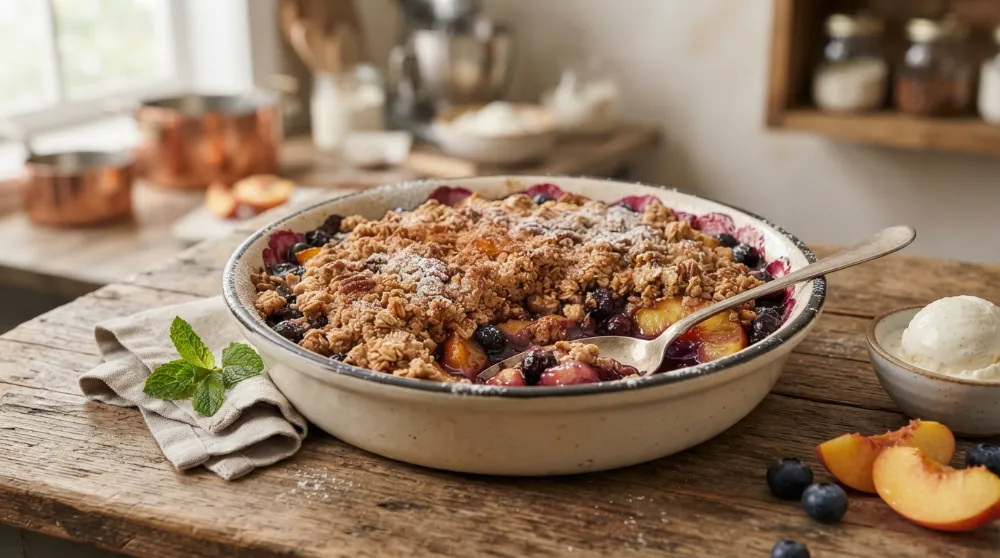

Bring the vibrant sweetness of summer straight to your table with this bubbling, deeply caramelized Blueberry Peach Crumble. Perfectly balance juicy stone fruits and tart berries under a thick, buttery mountain of golden-brown oats.
Blueberry Peach Crumble
The ultimate sweet, tart, and buttery summer dessert
Ingredients
For the Fruit Filling:
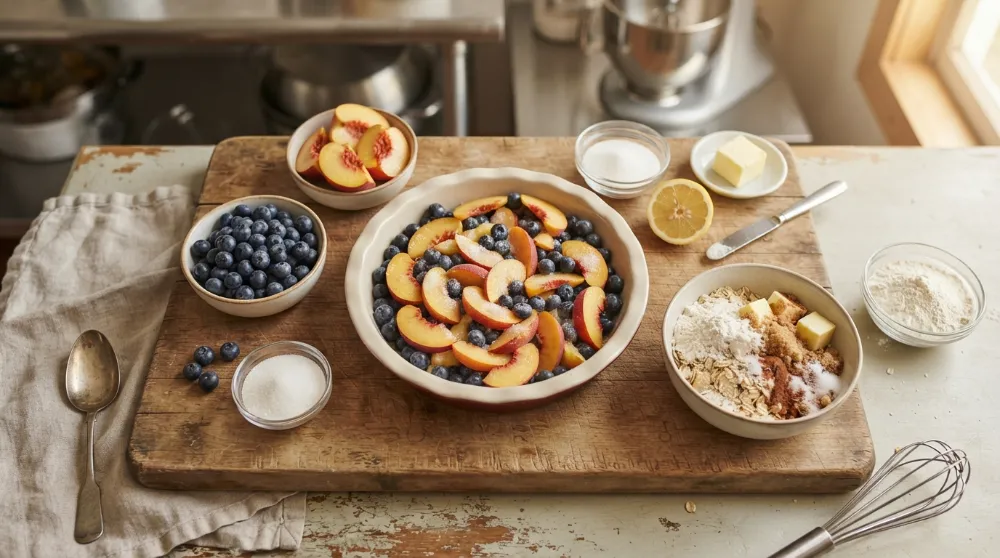
- 5 cups ripe yellow peaches, peeled, pitted, and sliced
- 2 cups fresh blueberries, rinsed and dried
- 1/4 cup granulated sugar
- 1 tablespoon fresh orange juice
- 1 tablespoon cornstarch (or arrowroot powder)
- 1 teaspoon pure vanilla extract
- 1/2 teaspoon ground cinnamon
For the Crumble Topping:
- 1 cup old-fashioned rolled oats
- 3/4 cup all-purpose flour
- 1/2 cup packed light brown sugar
- 1/2 teaspoon ground cinnamon
- 1/4 teaspoon fine salt
- 1/2 cup (1 stick) cold unsalted butter, cut into small cubes
- 1/4 cup chopped pecans or slivered almonds (optional)
Instructions
- Preheat & Prep: Preheat your oven to 375°F (190°C). Grease a 9×13-inch baking dish or a 10-inch cast-iron skillet with butter or baking spray.
- Mix the Fruit Filling: In a large mixing bowl, gently toss the sliced peaches, blueberries, granulated sugar, fresh orange juice, cornstarch, vanilla extract, and cinnamon until the fruit is evenly coated. Transfer the mixture to your prepared baking dish, spreading it into an even layer.
- Prepare the Crumble Topping: In a separate bowl, combine the rolled oats, flour, brown sugar, cinnamon, and salt. Add the cold, cubed butter. Using your fingers or a pastry cutter, work the butter into the dry ingredients until the mixture resembles coarse crumbs with some pea-sized pieces of butter remaining. Stir in the optional nuts if desired.
- Assemble the Dessert: Scatter the crumble topping evenly over the fruit layer, ensuring it is covered edge to edge but not packed down too tightly.
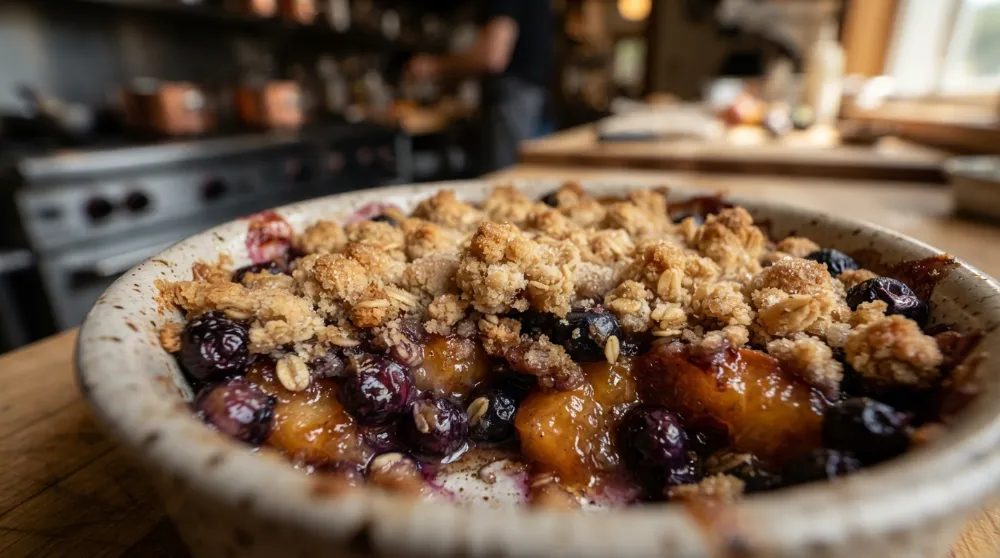
- Bake to Perfection: Place in the preheated oven and bake for 40 to 45 minutes, or until the topping is a deep golden brown and the fruit juices are bubbling rapidly at the edges.
- Cool and Serve: Remove from the oven and let cool for 15 minutes before serving. The juices will thicken as it cools. Serve warm with vanilla bean ice cream or freshly whipped cream.
The Fascinating History of Fruit Crumbles
The humble fruit crumble is a beloved baked dessert with a history that beautifully blends European wartime resourcefulness with North American seasonal agriculture. To understand the genesis of this delicious treat, we must look back to Great Britain during the Second World War. Food rationing was a challenging reality for home cooks across the country. Traditional double-crust pies required large quantities of flour, white sugar, and fat, including butter or lard, all of which were heavily rationed and difficult to obtain. Creative home cooks, determined to satisfy their families’ sweet tooth, developed a simpler, more economical alternative. By rubbing together tiny, ration-friendly portions of fat and flour with rolled oats, breadcrumbs, or wheat bran, they created a texturized, crumbly topping to stretch over stewed seasonal fruits. This resourceful modification saved precious ingredients while producing a dessert that was arguably even more texturally satisfying than standard pie pastry.
Across the Atlantic, similar baked-fruit desserts were evolving simultaneously. In the United States, the first recorded recipe for a fruit “crisp”, the close cousin of the crumble, appeared in print in 1924 in Everybody’s Cook Book: A Comprehensive Manual of Home Cookery. Over the years, the lines between these dishes blurred. In modern home baking, “crumble” (which typically features a flour-sugar-butter topping) and “crisp” (frequently incorporating rolled oats and crunchy nuts) have become largely interchangeable terms. Regardless of what you call it, the concept remains a comforting staple of comfort-food baking.
The combination of blueberries and peaches represents a quintessential American summer innovation. While traditional British crumbles historically featured cold-weather crops like apples, blackberries, or tart rhubarb, combining blueberries and peaches leverages the peak of summer harvest. Because both peaches and blueberries harvest at the exact same time in mid-to-late summer, local farm stands and home gardeners naturally paired the jammy, honey-like sweetness of sun-ripened yellow peaches with the tart, juicy burst of fresh blueberries. It is a match made in agricultural heaven.
Nutritional Profile of a Blueberry Peach Crumble
While this dessert is an indulgent treat, it boasts a wealth of wholesome, fruit-forward nutrients. The exact nutritional values depend heavily on the specific ratio of fruit to sweetener, and whether you decide to incorporate whole grains, nuts, or seeds into the golden topping. An average, standard serving size of Blueberry Peach Crumble, which is approximately 150g to 180g, typically contains the following nutritional breakdown:
- Calories: 270 to 350 kcal per serving
- Carbohydrates: 45g to 60g, which are primarily driven by the natural fructose in the fruit, combined with the complex starches in the unbleached flour and rolled oats.
- Sugars: 25g to 35g, representing a mix of natural fruit sugars and added brown or white sugars in the crumble topping.
- Dietary Fiber: 3g to 5g, contributed heavily by the nutrient-rich skins of the fresh blueberries, sliced peaches, and the whole-grain oats.
- Total Fat: 9g to 13g, largely derived from the high-quality butter, ghee, or coconut oil used to bind the crumble mixture. Saturated fat accounts for approximately 5g to 8g.
- Protein: 2g to 4g, contributed naturally by the oats, flour, and any added nuts like almonds or pecans.
- Micronutrients: This dessert serves as a fantastic, moderate source of Vitamin C from the fresh berries and stone fruits, Vitamin A, essential Potassium, and trace amounts of Iron.
Professional Flavor Variations to Elevate Your Crumble
Professional pastry chefs love to elevate the rustic blueberry peach crumble by introducing complex spices, balancing citrus acids, unique texturizers, and creative cooking methods. If you want to transform this classic dish into a high-end restaurant experience, consider experimenting with these professional variations:
1. The Classic Citrus & Spice
Many professional bakers brighten the heavy sweetness of tree-ripened peaches by tossing the fruit filling with freshly grated lemon zest, a squeeze of fresh lemon juice, and a gentle touch of ground cinnamon. The bright citrus acid cuts through the heavy sugars and prevents the peaches from oxidizing or browning during prep, while cold, cubed butter in the topping creates a rich, melt-in-your-mouth pastry texture that contrasts the soft fruit.
2. Ginger, Lime, & Toasted Hazelnut
This variation introduces a sharp, warming bite to the filling. Toss the peach and blueberry mixture in fresh lime juice, lime zest, and finely minced fresh ginger. The topping is elevated by mixing toasted, chopped hazelnuts or pecans into the oat-flour mixture, providing a deeply roasted, earthy crunch that balances the spicy zing of ginger.
3. Cardamom, Nutmeg, & Medjool Date
For an alternative, warm, and sophisticated flavor twist, ground cardamom and a pinch of freshly grated nutmeg are used to spice the fruit. Cardamom pairs exceptionally well with blueberries. The crumble topping is made by pulsing rolled oats, pitted Medjool dates, cinnamon, and melted coconut oil in a food processor, creating a naturally sweetened, sticky, and crisp topping that is completely refined-sugar-free.
4. Arrowroot & Slivered Almond
Chefs often prefer to use arrowroot powder instead of cornstarch as a grain-free thickener for the filling. This ensures that the bubbling fruit juices thicken into a glossy, jam-like consistency rather than running all over the plate. The topping is enriched with toasted slivered almonds and old-fashioned rolled oats for a multi-textured, crunchy bite.
5. Citrus Juice Maceration
While some traditional recipes macerate stone fruits in bourbon or rum, professional bakers often substitute these with a complex mixture of fresh orange juice, a splash of apple cider, and pure vanilla extract. This infuses the peaches with a deep, caramelized, and incredibly complex flavor without using alcohol, making it friendly for all ages.
6. Grilled Cast-Iron Skillet Crumble
Instead of baking your crumble in a traditional ceramic baking dish, assemble the fruit and crumble in a well-seasoned cast-iron skillet and cook it on an outdoor grill over indirect heat, or over a campfire. This caramelizes the bottom layer of peaches aggressively and infuses a faint, rustic smokiness into the entire dessert.
Essential Kitchen Equipment for the Best Crumble
Having the right tools in your kitchen can make preparing this Blueberry Peach Crumble an absolute breeze. Whether you are prepping ingredients or looking for alternative baking methods, these recommendations will elevate your culinary game:
- For Quick Veggie, Fruit, and Nut Prep: To chop nuts, dice firm peaches, or crumble your cold butter into flour efficiently, the Hamilton Beach Electric Vegetable Chopper is a massive time-saver that cuts down on manual prep work.
- For Modern Air Fryer Baking: Did you know you can make small-batch crumbles in an air fryer? The Cosori 9-in-1 TurboBlaze Air Fryer 6 Qt, PFAS-Free Ceramic Coating offers precise heating from 90°F to 450°F, letting you achieve a beautifully crisped oat topping without heating up your entire house. Alternatively, the Instant Vortex 6-Quart XL Air Fryer offers easy clean-up and a spacious basket perfect for small baking pans.
- For Monitoring the Perfect Golden Crust: If you love to watch your crumble bake to ensure the topping doesn’t burn, the Ninja Crispi 4-in-1 Glass Air Fryer features clear glass for easy monitoring and versatile functionality.
- For Multi-Cooker Ease: If you want to stew your fruit down into a rich compote before adding the topping, the versatile Instant Pot Duo 7-in-1 Electric Pressure Cooker (6-Qt) replaces multiple appliances to make kitchen work incredibly smooth. For slow-cooked family styles, a Crock-Pot 7-Qt Oval Slow Cooker works wonders to gently tenderize tough, underripe peaches.
- For Blending the Ultimate Creamy Accompaniment: To whip up a smooth, homemade vanilla bean sauce or a fruit coulis to drizzle on top, the NutriBullet 600 W Personal Blender (NBR-0601) is compact and incredibly powerful. If you have an active lifestyle, the high-performance Ninja NutriPlus Personal Blender will blend sauces to silky perfection in seconds.
- For the Perfect Beverage Pairing: Pair your warm, comforting dessert with a fresh, hot cup of coffee made instantly with the Keurig K-Express Coffee Maker.
Expert Tips for the Perfect Golden Topping
Achieving the perfect texture contrast between a soft, jam-like fruit base and a crunchy, buttery topping requires a little bit of food science. Follow these pro tips to make sure your Blueberry Peach Crumble turns out perfectly every single time:
Keep Your Butter Ice-Cold
The secret to a truly crumbly, flaky topping is using cold butter. When cold pieces of butter melt during baking, they release steam, creating tiny air pockets in the topping. This makes the topping light and crisp. If your butter is too warm or melted when you mix it, the flour will absorb it entirely, resulting in a dense, greasy, cookie-like crust rather than distinct, crunchy crumbs.
Don’t Overmix the Crumble
When mixing your dry ingredients with the cold butter, stop as soon as the mixture starts clumping together into pea-sized mounds. Overmixing will develop the gluten in the flour, making the topping tough rather than light and melt-in-your-mouth tender.
Adjust Thickeners Based on Fruit Ripeness
Very ripe, juicy summer peaches will release a substantial amount of water during baking. If your peaches are extremely juicy, feel free to add an extra half-tablespoon of cornstarch or arrowroot powder to the filling. This prevents your crumble from becoming watery and ensures a glossy, thick sauce that beautifully clings to the fruit.
How to Store, Freeze, and Reheat
This dessert is so delicious that you are unlikely to have leftovers, but if you do, storing and reheating it is incredibly simple.
Storage: Allow the crumble to cool completely to room temperature. Cover the baking dish tightly with aluminum foil or plastic wrap, or transfer the leftovers to an airtight container. Store in the refrigerator for up to 4 to 5 days.
Freezing: You can freeze the baked crumble for up to 3 months. Wrap the cooled baking dish in a double layer of plastic wrap and a final layer of heavy-duty aluminum foil. To bake from frozen, remove the plastic wrap, cover with foil, and bake at 350°F (175°C) for 20 minutes, then uncover and bake for another 10 to 15 minutes until hot and bubbling.
Reheating: To preserve the crunchy texture of the oat topping, reheat individual portions in an oven or air fryer at 350°F (175°C) for 5 to 8 minutes. Avoid microwave reheating if possible, as it can make the topping soft and soggy.