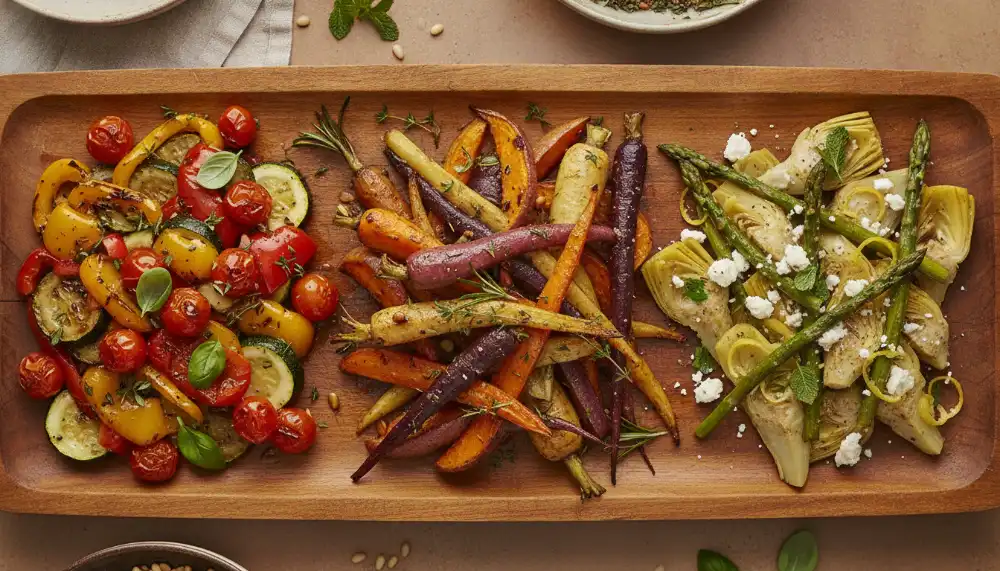

Elevate your culinary repertoire with our definitive guide to 3 ways Mediterranean roasted vegetables, a celebration of sun-ripened produce and ancient spice traditions. This masterclass provides the historical context and professional techniques needed to achieve perfectly caramelized results every single time.
3-Way Mediterranean Master Roast
Ingredients
- 1 2 lbs mixed vegetables (zucchini, bell peppers, red onion, eggplant)
- 2 1/4 cup extra virgin olive oil
- 3 Levantine Option: 2 tbsp Za’atar, 1 tsp Turmeric, 1 cup cooked chickpeas
- 4 Aegean Option: 2 tbsp dried Oregano, 3 cloves garlic, 1/4 cup chicken broth
- 5 Riviera Option: 2 tbsp Balsamic vinegar, 1 tsp dried basil, 1/2 tsp black pepper
Instructions
- 1 Preheat your oven to 425°F (220°C). Use a large baking sheet for even heat distribution.
- 2 Chop all vegetables into uniform 1-inch pieces to ensure consistent roasting times.
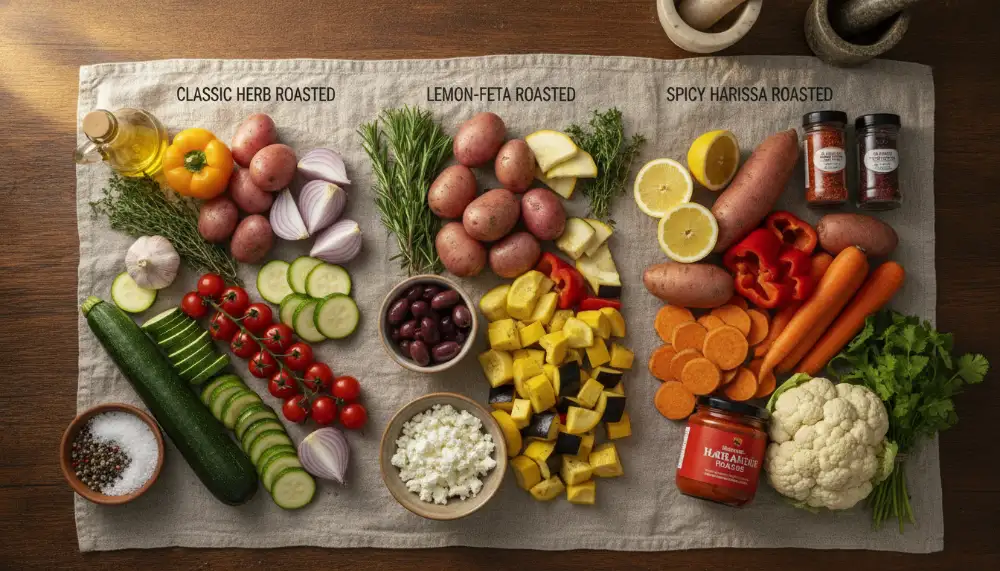
- 3 In a large bowl, toss the vegetables with olive oil and your chosen flavor profile (Levantine, Aegean, or Riviera).
- 4 Spread vegetables in a single layer on the sheet. Do not crowd the pan, as this causes steaming instead of roasting.
- 5 Roast for 25 to 30 minutes, tossing halfway through, until edges are charred and tender.
The Historical Odyssey of Mediterranean Roasted Vegetables
The story of Mediterranean roasted vegetables is a narrative of civilization itself. For thousands of years, the inhabitants of the Mediterranean basin have relied on the agricultural bounty provided by the fertile soils and temperate climate. Long before the advent of modern kitchen appliances, communal earth ovens and open wood fires were the primary means of cooking. This ancient method of “roasting” developed out of necessity, but it quickly became an art form that defined the culinary identities of multiple nations.
In the ancient Levant, the practice of roasting eggplant and onions over hot coals created the foundational smoky flavors we now associate with high-end Mediterranean cuisine. However, the vegetables we consider “classic” today have varied origins. The Arab expansion in the 9th century was a pivotal moment, as it introduced sophisticated irrigation techniques and new crops like citrus and eggplant to Southern Europe. This influx of variety allowed for more imaginative vegetable medleys that transitioned from simple survival food to complex, spiced dishes.
Furthermore, the 15th and 16th centuries brought the New World Exchange, introducing the tomato and the bell pepper from the Americas. These ingredients were seamlessly integrated into existing roasting traditions, giving birth to iconic dishes like the French Ratatouille and the Greek Briam. Today, when we explore 3 ways Mediterranean roasted vegetables can be prepared, we are participating in a global culinary dialogue that has been centuries in the making. Utilizing the Cuisinart 8 Cup Food Processor can help you honor this tradition by quickly and uniformly slicing these historic vegetables for modern prep.
The Science of Nutrition: Why Roasting is a Health Powerhouse
Mediterranean roasted vegetables are much more than just a delicious side dish, they are a nutritional powerhouse essential for a heart-healthy lifestyle. The Mediterranean diet has long been recognized as one of the healthiest in the world, and roasted vegetables play a central role in this reputation. When vegetables are roasted at high temperatures, the caramelization process (the Maillard reaction) not only enhances flavor but also helps to preserve many of the essential vitamins and minerals.
These vegetables are exceptionally high in Vitamins A, B6, and C, which are vital for immune function and skin health. They are also rich in Potassium and Magnesium, minerals that support healthy blood pressure and muscle function. Perhaps most importantly, the use of extra virgin olive oil in the roasting process is key. The monounsaturated fats in olive oil are not only heart-healthy themselves, but they are also necessary for the absorption of fat-soluble vitamins (A, D, E, and K) found within the vegetables.
A typical 100g serving of mixed roasted vegetables contains approximately 68 calories and is high in dietary fiber, which promotes satiety and digestive health. Moreover, roasting tomatoes increases the bioavailability of lycopene, a potent antioxidant that supports cardiovascular health. For those looking for a faster, more efficient way to achieve these nutritional benefits, the Cosori 9-in-1 TurboBlaze Air Fryer 6 Qt is an excellent professional recommendation, as it roasts vegetables perfectly with a large family capacity while using even less oil than traditional methods.
Variation 1: The Levantine Spice Blend (Aromatic & Zesty)
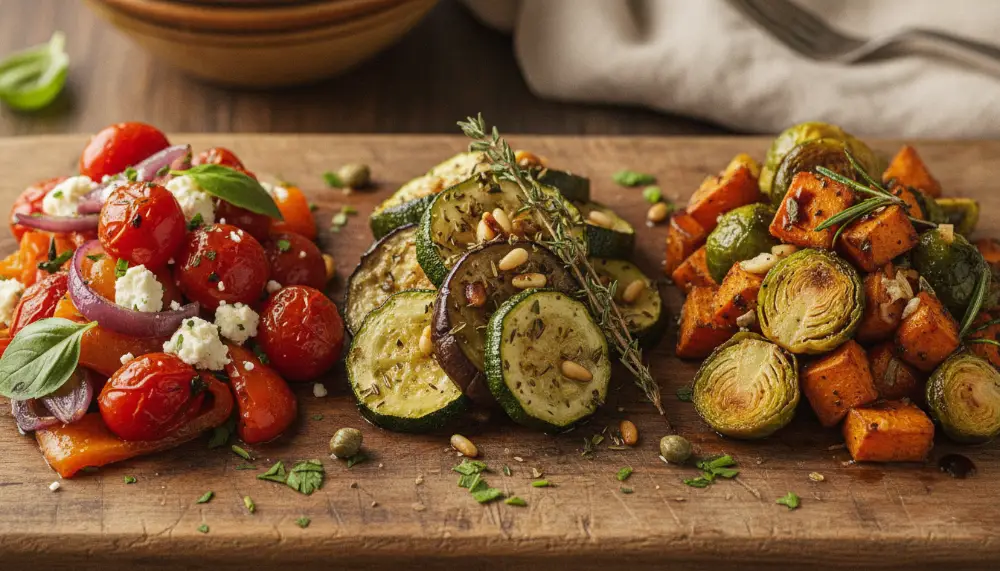
The first of our 3 ways Mediterranean roasted vegetables focuses on the bold, earthy flavors of the Eastern Mediterranean. This variation is defined by the use of Za’atar, a traditional spice blend usually containing thyme, toasted sesame seeds, and sumac. When combined with turmeric, it gives the vegetables a beautiful golden hue and a complex, slightly nutty profile.
For this version, we recommend using cauliflower florets, thick wedges of eggplant, and red onions. The eggplant, in particular, acts like a sponge, soaking up the aromatic spices and the richness of the olive oil. To add a layer of texture and protein, we include cooked chickpeas on the roasting pan. These become wonderfully crispy in the oven, providing a delightful crunch that contrasts with the tender vegetables. Instead of using white wine for moisture, a squeeze of fresh lemon juice or a drizzle of pomegranate molasses provides the necessary acidity to balance the earthy spices. This version pairs exquisitely with grilled beef kabobs or roasted chicken thighs, making it a complete and satisfying meal.
Variation 2: The Aegean Herb Roast (Fresh & Briny)
Inspired by the sun-drenched islands of Greece, the Aegean Herb Roast is the second of our 3 ways Mediterranean roasted vegetables. This variation is all about freshness and simplicity, relying heavily on dried oregano, fresh rosemary, and whole garlic cloves. The vegetables used here, such as zucchini, bell peppers, and Yukon gold potatoes, provide a vibrant array of colors and textures.
To keep the vegetables moist and flavorful without the use of alcohol, we utilize a high-quality chicken or vegetable broth. This creates a small amount of steam in the oven that helps the potatoes become creamy on the inside while the outside stays crisp. After roasting, finishing the dish with a sprinkle of sea salt and a squeeze of lemon juice enhances the natural sweetness of the bell peppers. If you want to take this to a professional level, use the Ninja BN751 Professional Plus DUO Blender to whip up a quick tahini or yogurt-based sauce to drizzle over the top. This variation is a fantastic vegetarian option when served over quinoa, or it can be paired with a pan-seared chicken breast for a protein-rich dinner.
Variation 3: The Riviera Balsamic Glaze (Rich & Savory)
The final of our 3 ways Mediterranean roasted vegetables takes its cues from the northern Mediterranean coast. This variation is characterized by a deep, savory richness achieved through a balsamic glaze and the inclusion of earthy mushrooms and sweet carrots. The balsamic vinegar provides a sophisticated tang and a beautiful dark glaze that makes the vegetables look as good as they taste.
In this version, we use red bell peppers, Portobello mushrooms, and asparagus. The high heat of the oven causes the sugars in the balsamic vinegar to caramelize, creating a rich coating that is perfectly complemented by the addition of dried basil and freshly cracked black pepper. Since we avoid alcohol in our recipes, the balsamic vinegar serves as the perfect substitute for red wine, offering the same level of depth and tannins. This variation is particularly well-suited for pairing with seared beef medallions or as a hearty topping for a warm grain salad. The complexity of flavors ensures that this dish feels like a restaurant-quality meal prepared in the comfort of your own home.
Professional Tips for the Perfect Roast
Achieving the perfect roast requires more than just high heat, it requires attention to detail. One of the most common mistakes is crowding the roasting pan. When vegetables are too close together, they release moisture that gets trapped, causing them to steam rather than roast. This results in a mushy texture instead of the desired charred, caramelized edges. Always use two pans if necessary to ensure every piece of vegetable has enough space for air to circulate.
Another professional secret is the size of the vegetable cuts. Harder vegetables, like carrots and potatoes, should be cut into smaller pieces than softer vegetables, like zucchini and mushrooms. This ensures that everything finishes cooking at the same time. Furthermore, always toss your vegetables in a bowl with oil and spices before putting them on the pan. This guarantees an even coating, which is essential for both flavor and consistent browning. By following these technical steps, you can master the 3 ways Mediterranean roasted vegetables and provide your family with a gourmet experience every night of the week.
Substituting Alcohol and Pork: A Guide
In professional cooking, flavor is paramount, and there are many ways to achieve depth without the use of pork or alcohol. For pork-based fats, high-quality extra virgin olive oil or even beef tallow can be used to provide a rich mouthfeel. When it comes to replacing wine, acidity is the goal. For white wine, use a mixture of chicken broth and a splash of lemon juice. For red wine, unsweetened pomegranate juice or a high-quality red wine vinegar diluted with a little water works beautifully. These substitutions ensure that your 3 ways Mediterranean roasted vegetables remain accessible to everyone while maintaining the highest standard of flavor.