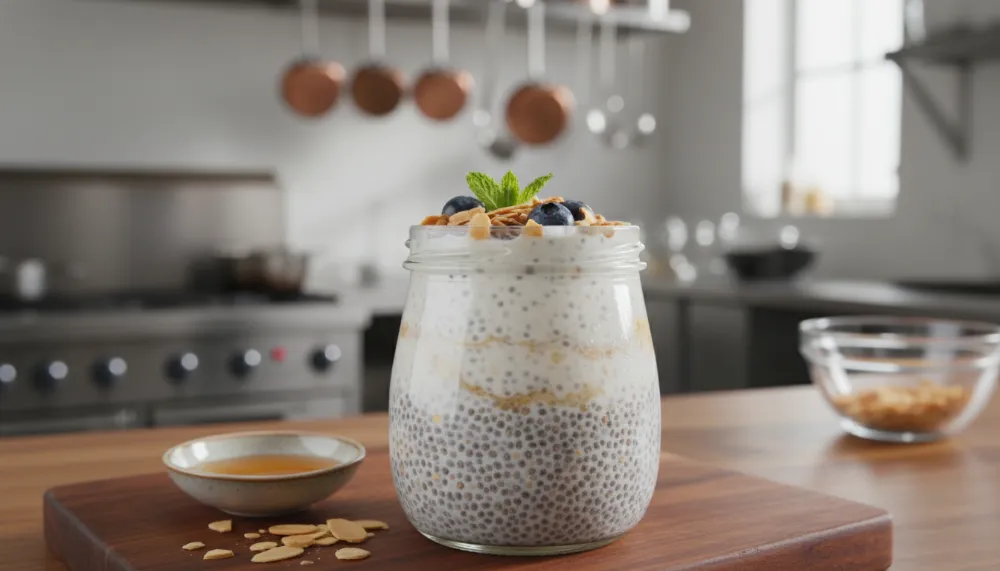

Mastering the perfect chia seed pudding with almond milk is all about hitting that golden ratio for a creamy, satisfying texture every single time. This versatile breakfast staple offers a powerhouse of nutrition in a simple, no-cook format that fits perfectly into any busy schedule.
Perfect Ratio Almond Milk Chia Pudding
Ingredients
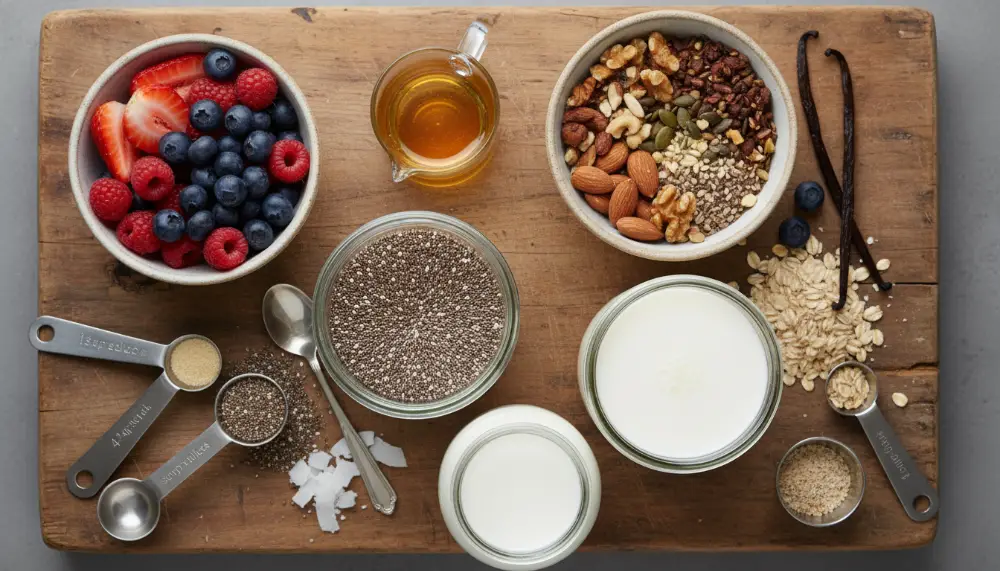
- 3 tablespoons Chia Seeds (black or white)
- 1 cup Unsweetened Almond Milk
- 1 tablespoon Maple Syrup or Honey
- 1/4 teaspoon Vanilla Bean Powder (alcohol-free)
- 1 pinch Sea Salt
Instructions
- 1 Combine the chia seeds, almond milk, sweetener, vanilla, and salt in a glass jar or bowl.
- 2 Whisk or stir vigorously for 2 minutes to ensure no seeds stick to the bottom.
- 3 Let the mixture rest at room temperature for 5 minutes, then stir once more to break up any clumps.
- 4 Cover and refrigerate for at least 2 hours, ideally overnight.
- 5 Before serving, stir well and add your favorite fresh fruit or nut toppings.
The Ancient History of the Chia Seed
The history of the chia seed, or Salvia hispanica, is deeply rooted in ancient Mesoamerican civilizations. For the Aztecs and Mayans, these tiny seeds were far more than a simple food source, they were a primary staple that ranked alongside corn and beans in cultural and nutritional importance. The word “chia” itself is derived from the Mayan word for “strength,” a testament to the power these seeds were believed to bestow upon those who consumed them.
Known historically as the “runner’s food,” Aztec warriors relied on chia seeds for sustained energy during long-distance travels and grueling battles. It was said that a single tablespoon of these nutrient-dense seeds could sustain a warrior for an entire day. Beyond mere nutrition, chia was culturally sacred. It was used as an annual tribute to Aztec rulers and frequently offered to deities in complex religious ceremonies. After the Spanish conquest, chia cultivation nearly disappeared due to its religious associations, but the plant survived in small mountain pockets of Mexico and Guatemala. It re-emerged in the late 20th century as a “superfood,” largely thanks to its unique hydrophilic properties that create the modern, gel-like texture we enjoy in pudding today.
Decoding the Science: The Perfect Ratio Guide
When searching for the ultimate Chia Seed Pudding with Almond Milk – Perfect Ratio Guide, consistency is the number one concern for home cooks. If you use too much liquid, you end up with a watery mess, too little, and you have a thick, unappealing sludge. Through rigorous testing, the gold standard has been identified as a 1:3 or 1:4 ratio, depending on your desired thickness.
For a traditional, spoonable pudding that mimics the texture of tapioca, the 3 tablespoons of chia seeds to 1 cup of almond milk ratio is unbeatable. If you prefer a slightly thinner consistency, perhaps for pouring over granola, you might increase the milk to 1 1/4 cups. The reason chia seeds work so well is their ability to absorb up to 12 times their weight in liquid. This creates a mucilaginous coating around each seed, resulting in a thick, pudding-like gel. To ensure this process happens evenly, using a high-quality mixing tool like the NutriBullet 600W Personal Blender can help if you prefer a completely smooth, mousse-like texture rather than the whole-seed “caviar” style.
Nutritional Profile: Why This is the Ultimate Breakfast
A single cup serving of chia pudding made with unsweetened almond milk is a nutritional powerhouse. It typically contains between 180 and 210 calories, but those calories are packed with vital nutrients. One of the most significant benefits is the Omega-3 fatty acid content. Chia seeds are one of the richest plant-based sources of alpha-linolenic acid (ALA), providing over 300% of your daily required intake in just one serving. This is crucial for heart health and reducing inflammation throughout the body.
Furthermore, the fiber content is staggering. With 11 to 13 grams of dietary fiber per cup, this pudding covers nearly 45% of your daily needs, promoting digestive health and keeping you full until lunch. Unlike many other plant sources, chia seeds are a “complete protein,” meaning they contain all nine essential amino acids that the human body cannot produce on its own. This makes it an exceptional choice for those following plant-based diets who need to ensure high-quality protein intake.
Vitamins and Minerals Breakdown
- Calcium: 350mg (25% DV) – Essential for bone density and nerve function.
- Magnesium: 110mg (28% DV) – Helps regulate muscle and nerve function, blood sugar levels, and blood pressure.
- Manganese: 0.8mg (35% DV) – Important for bone formation and nutrient metabolism.
- Iron: A significant boost for energy levels and oxygen transport in the blood.
Professional Flavor Variations & Dietary Tweaks
While the base recipe is delicious, the versatility of chia pudding is where it truly shines. To keep things strictly within healthy and dietary guidelines, we focus on whole-food flavor enhancers. For a “Chocolate Decadence” version, whisk in 1 tablespoon of unsweetened cocoa powder and an extra dash of maple syrup. This transforms the breakfast into a rich dessert-like treat without the sugar crash.
Another popular variation is “Golden Milk Chia Pudding.” By adding 1/2 teaspoon of turmeric, 1/4 teaspoon of ginger powder, and a tiny pinch of black pepper, you create an anti-inflammatory powerhouse. The black pepper is essential here as it activates the curcumin in the turmeric. If you are looking for a refreshing twist, a berry compote layer is the way to go. Instead of using store-bought jams which often contain alcohol-based preservatives or high sugar, simmer fresh raspberries with a splash of lemon juice until they break down into a thick sauce.
Recommended Kitchen Essentials
To prepare these variations and maintain a professional-grade kitchen, consider these tools:
- For creating smooth fruit purees: Ninja NutriPlus Personal Blender.
- For chopping nuts and seeds for toppings: Hamilton Beach Electric Vegetable Chopper.
- For keeping your morning coffee ready to pair with your pudding: Keurig K-Express Coffee Maker.
- If you want to roast some seeds or nuts for a crunchy topping: Cosori 9-in-1 TurboBlaze Air Fryer.
Common Mistakes and Expert Troubleshooting
Even a simple recipe like this can go wrong if you don’t follow the technique. The most common issue is the “Clumping Problem.” If you simply pour the seeds into the milk and walk away, the seeds will settle at the bottom and form a solid, rubbery block. To prevent this, you must stir immediately, wait five minutes, and then stir again. This “double-stir” method ensures each seed is suspended in the almond milk and has space to expand.
Another issue is using stale seeds. While chia seeds have a long shelf life, they can eventually lose their gelling power. If your pudding hasn’t thickened after two hours, your seeds might be too old. You can test your seeds by placing a teaspoon in a small amount of water, if they don’t form a gel within 10 minutes, they should be replaced. Also, remember that almond milk is naturally quite thin. For a creamier result, you can use the Ninja Crispi 4-in-1 Glass Air Fryer to lightly toast some coconut flakes to stir in, adding healthy fats and texture.
Meal Prep and Long-Term Storage
Chia seed pudding is the ultimate meal prep champion. It can be stored in the refrigerator for up to five days, making it perfect for Sunday evening prep sessions. Use individual glass jars to portion out your breakfasts for the week. This not only saves time but also ensures the pudding stays fresh and doesn’t absorb other odors from the fridge.
Can you freeze chia pudding? Absolutely. You can freeze it in airtight containers for up to three weeks. When you’re ready to eat it, thaw it in the fridge overnight. You may find it needs a quick stir and a tiny splash of fresh almond milk to return to its original creamy glory. For those who like a warm breakfast, you can actually heat chia pudding gently on the stove or in a Crock-Pot 7-Qt Oval Slow Cooker on a low setting for a warm, porridge-like experience during colder months.
Frequently Asked Questions
How long does it take for chia pudding to set?
While it will begin to thicken within 30 minutes, it takes at least 2 hours to reach a true pudding consistency. For the best results, an overnight soak of 8 to 12 hours is recommended.
Is white chia better than black chia?
Nutritionally, they are virtually identical. Black chia seeds are more common and provide a nice contrast in light-colored almond milk. White chia seeds are often used when a more uniform, aesthetic look is desired, particularly in vanilla or lemon-flavored puddings.
Why is my chia pudding crunchy?
This usually means the seeds haven’t had enough time or liquid to fully hydrate. Ensure you are using the correct 1:3 ratio and letting it sit for at least 2 hours. If it’s still crunchy, add another tablespoon of almond milk and wait another 30 minutes.
Can I use other milks?
Yes, while this guide focuses on almond milk, you can use coconut, oat, or cashew milk. Just be aware that thicker milks like canned coconut milk will result in a much denser, almost fudge-like pudding.